


FILLETING AND SLICING BANDSAWS
At Mesi Saws & Blades, we manufacture high-performance band knives and serrated blades for filleting and slicing processes. Our tools are designed with superior quality steels to guarantee clean, precise, and waste-free cuts across a wide range of food products, optimizing productivity and minimizing raw material waste.
CUTTING AND SLICING SOLUTIONS
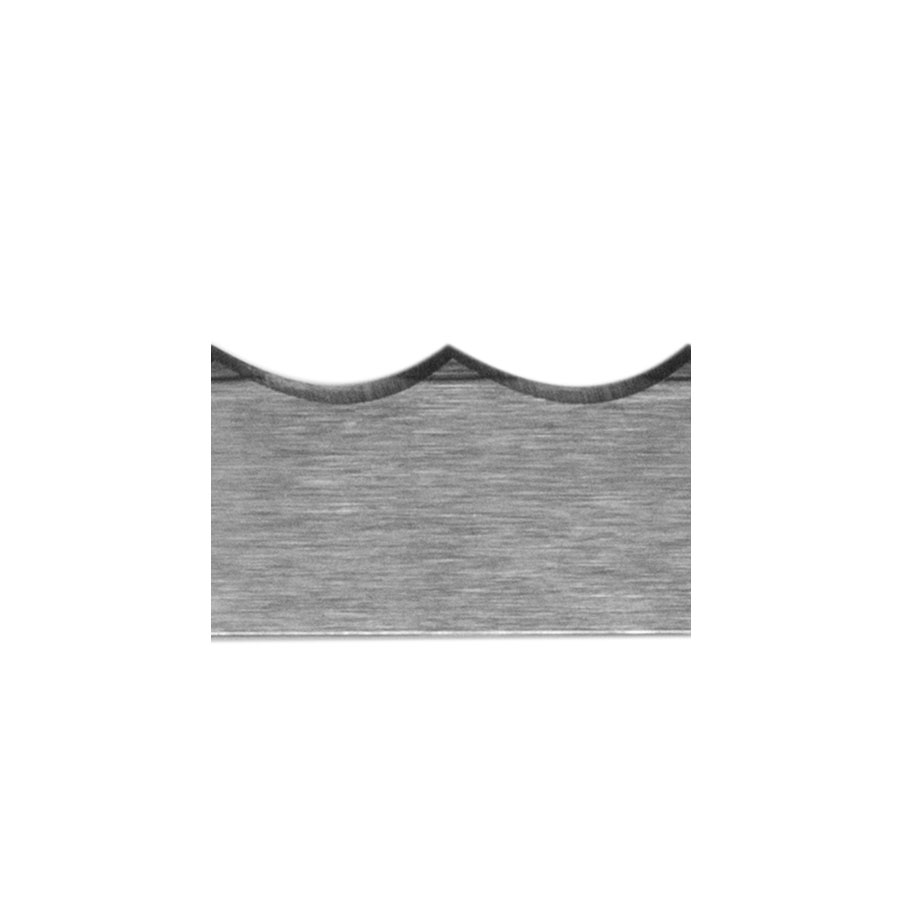
Concave
Tooth size: 12.5mm. Scalloped and beveled profile.
Ideal for precision slicing of boneless fresh products such as cheeses, cold meats, bread, and vegetables. Guarantees a clean cut without tearing.
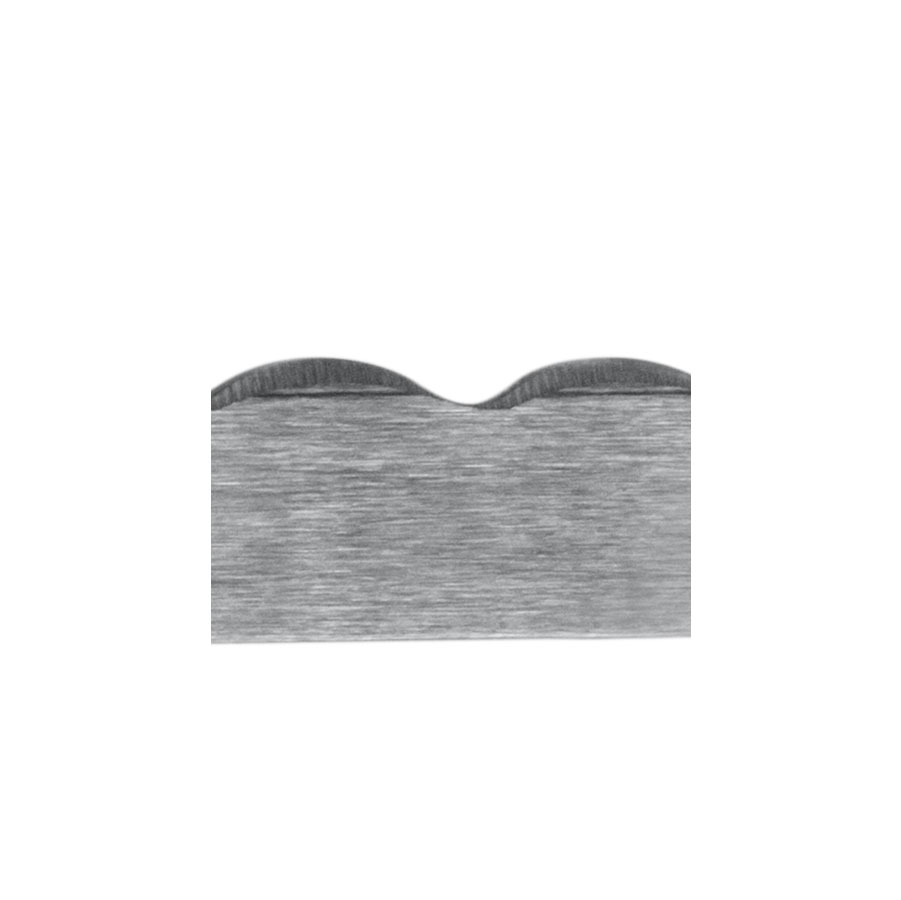
Convex
Tooth size: 15mm. Scalloped and beveled profile.
Specifically indicated for poultry filleting and white meats. Its design significantly reduces friction.
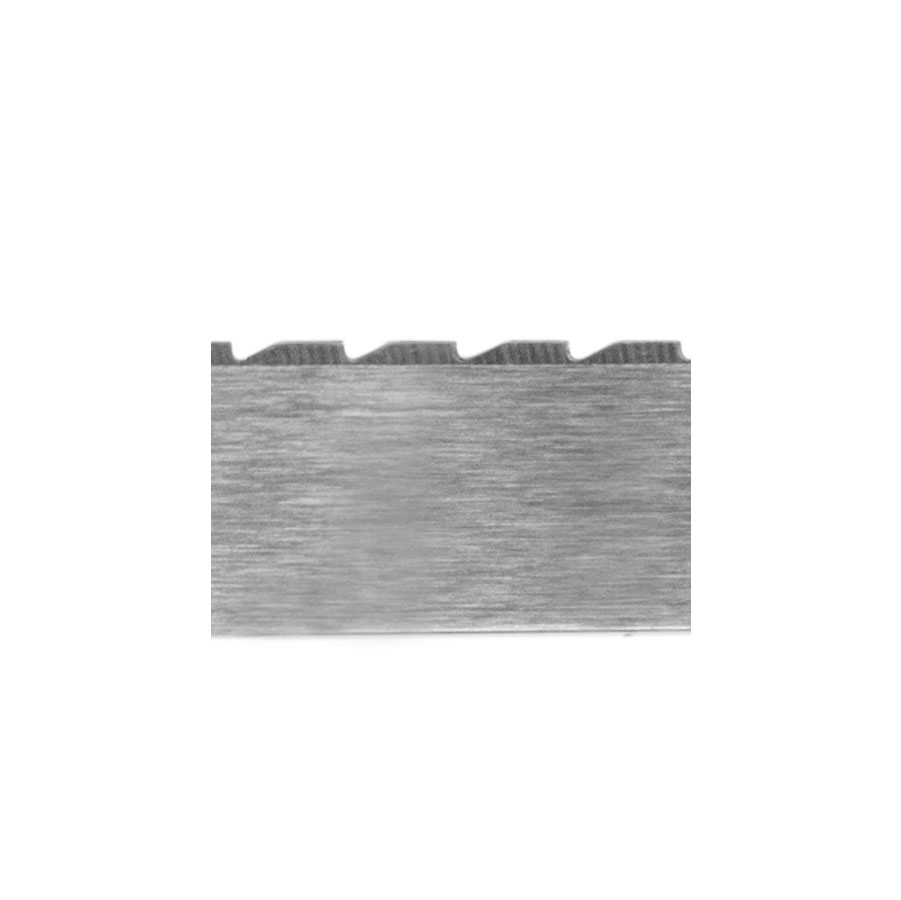
3+3 DB
Tooth size: 6mm. Straight edge with double bevel.
Perfect for industrial slicing of soft products. The double bevel ensures the slice maintains its structural integrity in every pass.
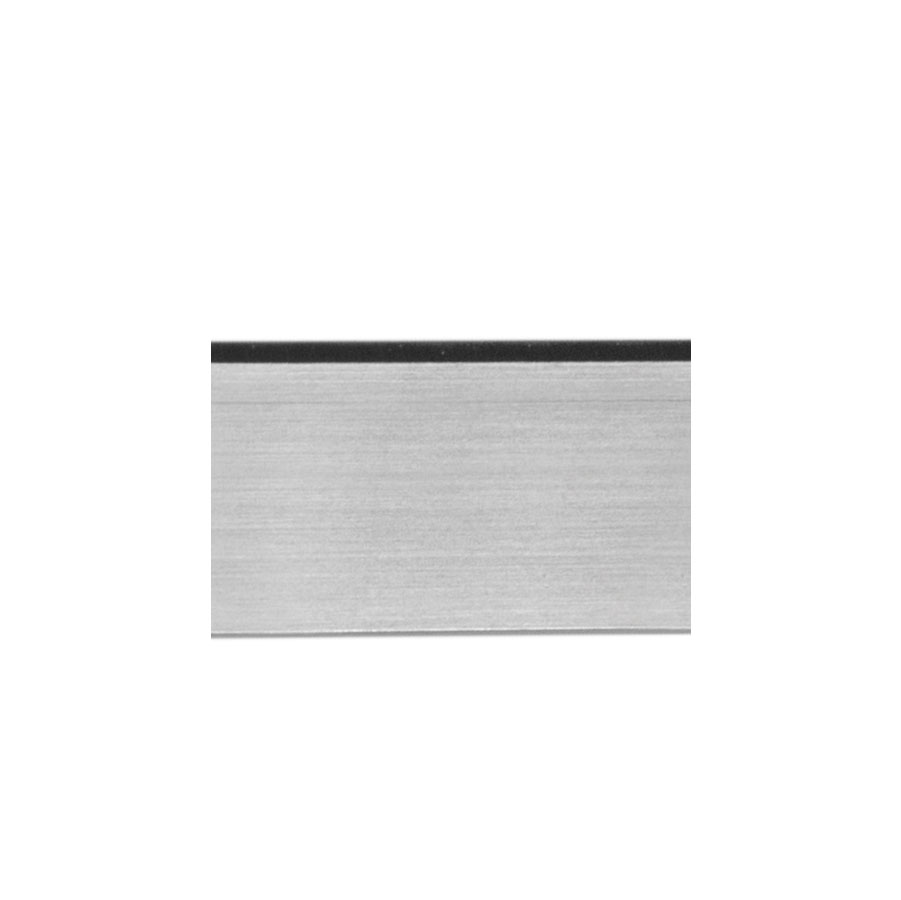
DB Band Knife
Straight edge band knife with double-sided bevel.
Versatile tool for cheese and cold meat slicing. Designed to work in high-production environments with minimum waste.
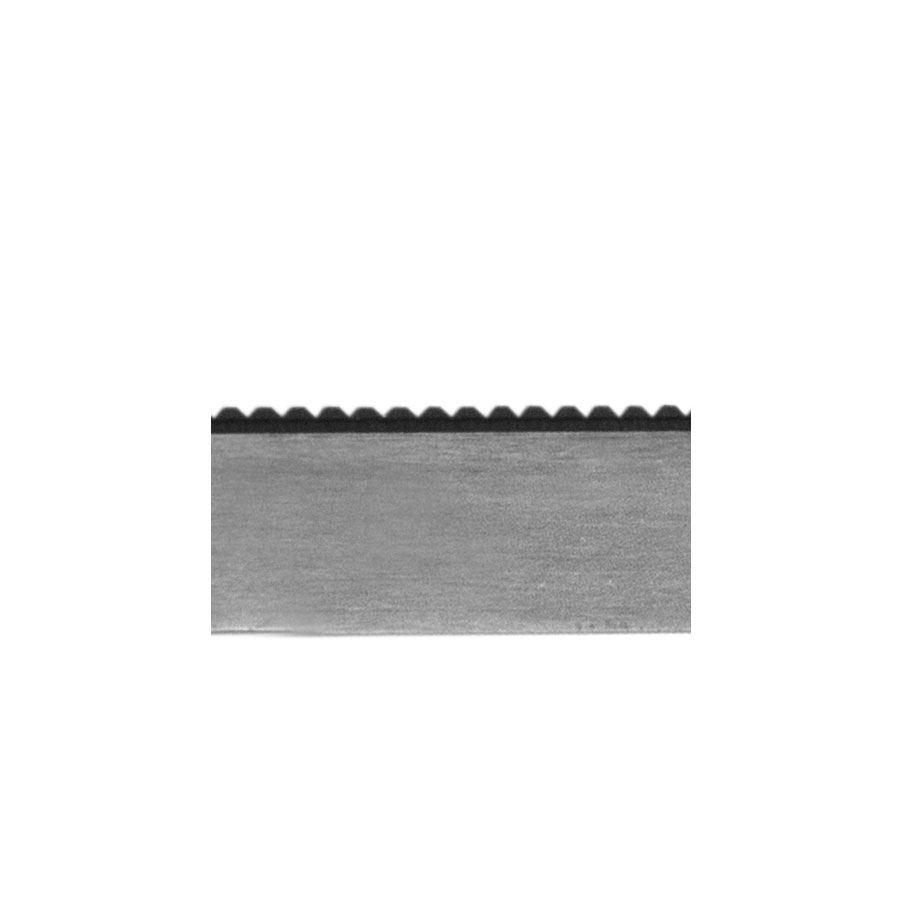
VTooth DB+1 (Micro-serrated)
High-precision micro-serrated band with double bevel.
Specifically developed for automatic slicing lines for ham, salami, and bacon. Widely used in the pre-cooked pizza industry.
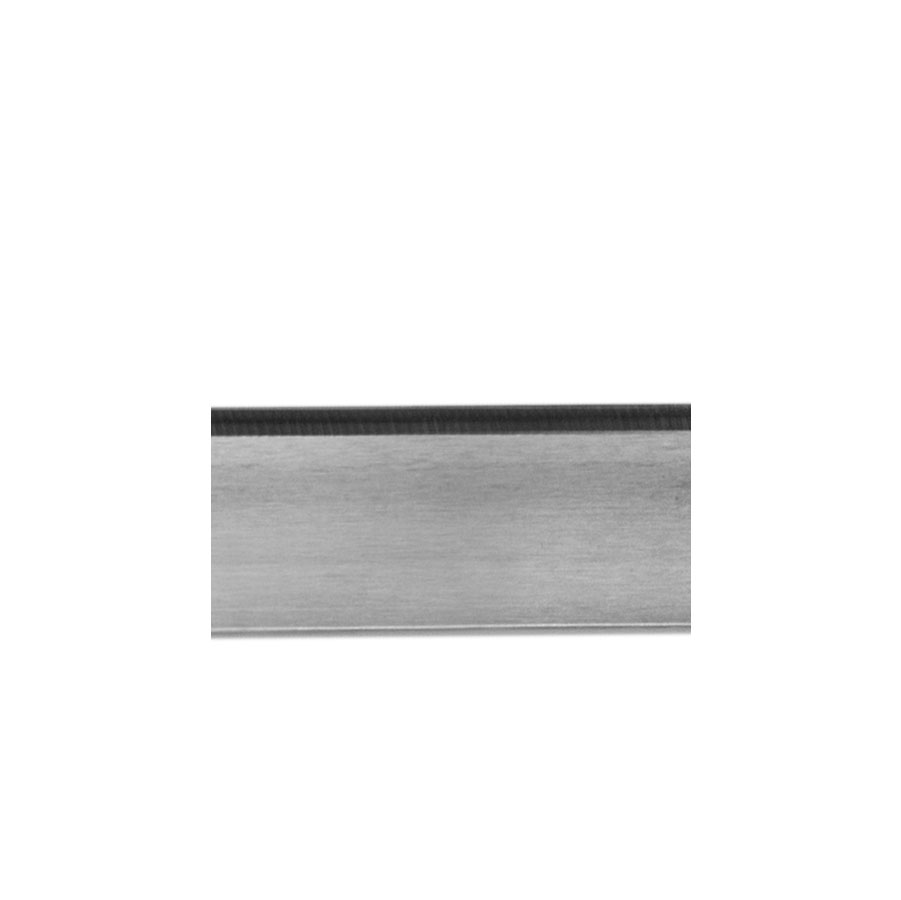
DB+1 Band Knife
Band knife with variable angle bevel.
Optimizes bacon and vegetable slicing in automatic machines. Its special geometry reduces product adhesion to the blade.
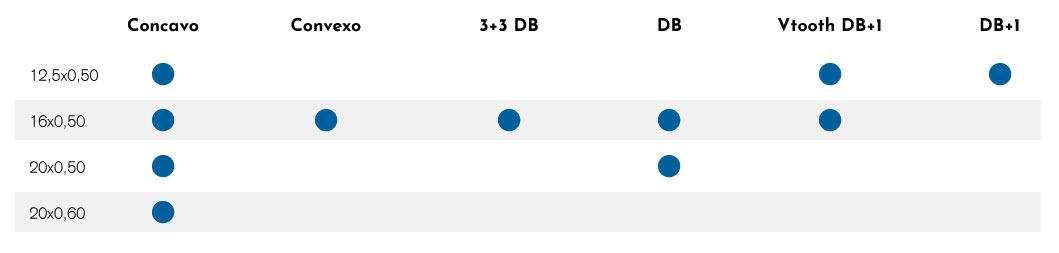
FILLETING AND SLICING BANDSAWS MEASUREMENTS
Check our standard measurement table for filleting saws. We manufacture custom solutions according to your industrial machinery requirements.
FREQUENTLY ASKED QUESTIONS ABOUT FILLETING AND SLICING BANDSAWS
What is the difference between a serrated saw and a band knife for slicing?
The choice between a serrated blade and a band knife depends on the food structure and the desired finish. Band knives—which can have a smooth, concave, or scalloped edge—act like an industrial scalpel, allowing for surgical cuts in soft or delicate products without tearing the fiber. They are the ideal solution for slicing cold meats, cheeses, or boneless meats, where a perfectly smooth cutting surface and premium presentation are required.
In contrast, serrated saws are friction tools designed for products with higher mechanical resistance, such as meat with bone or frozen products. The teeth function to pierce and evacuate the material (meat dust) efficiently. At Mesi Saws & Blades, we advise our clients on whether their process requires the clean glide of an industrial band knife or the penetration force of a serrated saw, thus optimizing the productivity of each line.
How does a filleting saw help reduce product waste?
In the processing industry, profitability is measured by maximum raw material utilization. Our filleting and slicing saws are manufactured with reduced thickness and high-precision beveled profiles (such as concave or convex), which generate a waste-free cut. Unlike conventional saws that turn part of the piece into dust, these blades separate the fibers cleanly, ensuring that almost 100% of the product becomes usable commercial slices.
This material saving is especially critical for high-value products like salmon, loin, or bacon. By reducing friction and waste, Mesi Saws & Blades tools not only improve the plant’s economic performance but also maintain product integrity, preventing cutting heat from altering fats or texture. Investing in a quality filleting blade is the most direct way to optimize profit margins in every shift.
Are these blades suitable for high-speed automatic slicing lines?
Absolutely. At MESI Saws & Blades, we have developed specific models such as the VTooth DB+1 and DB+1, designed to withstand the extreme demands of latest-generation automatic portioning lines. These blades are ready to work at very high linear speeds and under constant tension while maintaining absolute directional stability. This guarantees that, even in mass production, slice thickness remains uniform without deviations that would force machinery to stop.
Durability is another key factor; thanks to our hardening processes and the use of high-resistance European steels, these blades withstand thousands of cutting cycles before needing replacement. Stability in automatic cutting reduces technical downtime and machinery readjustments, making our industrial blades the preferred component for production managers seeking reliability and uninterrupted workflow in their facilities in Zaragoza or any distribution point.
Can they be used for frozen products?
These smooth and beveled edge configurations are technically optimized for fresh, semi-frozen, or slightly tempered (crust-frozen) products. Their design aims for aesthetic perfection and smooth passage through tissues that do not offer stone-like hardness. For processing deep-frozen products (at temperatures below -18°C), these blades could suffer premature wear or even breakage due to the lack of ice chip evacuation.
For extreme cold conditions, at MESI Saws & Blades we recommend our specific ranges of bandsaw blades for fish or frozen meat. These feature set teeth that fluidly clear ice dust, preventing the blade from jamming or deviating due to frozen residue build-up. If you have doubts about which tool to use based on your product’s temperature, our technical team at Centrovía Industrial Park will help you choose the exact configuration to maximize safety and performance.