


Meat bandsaws
BANDSAW FOR MEAT AND BONE CUTTING IN THE FOOD INDUSTRY
At MESI, we manufacture bandsaw blades using high-quality steel to achieve stable cutting in fresh meat, frozen meat, and bone-in meat.
This page gathers the most common configurations for meat saw blades (tooth pitch and use), helping you choose the right bandsaw blade for meat cutting for your process.
- Choice by application: fresh meat, frozen, bone-in, poultry.
- Choice by performance: productivity, finish, waste evacuation.
- Hygiene: stainless steel options for demanding environments.
MEAT CUTTING
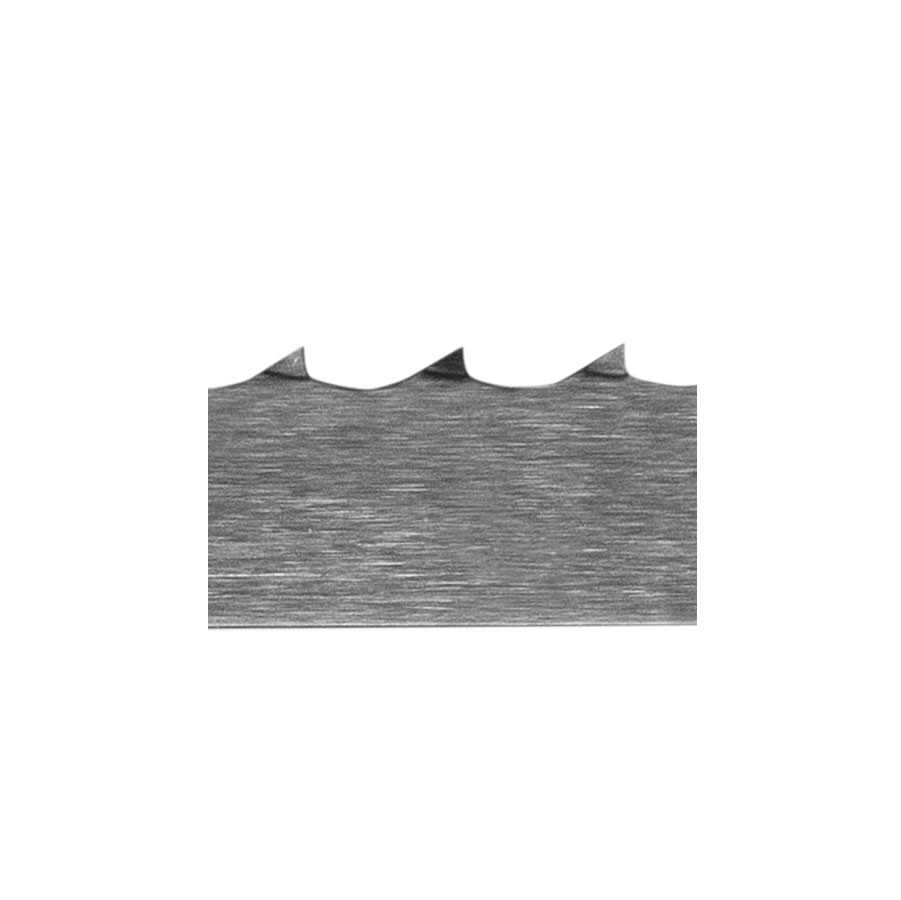
3tpi
Tooth size: 8.46 mm (3 teeth per inch).
Recommended as a meat saw blade for frozen and fresh meat when seeking a more aggressive cut and high production volume.
Works especially well on machines with a linear speed above 20 m/s.
Available in stainless steel for maximum hygiene.
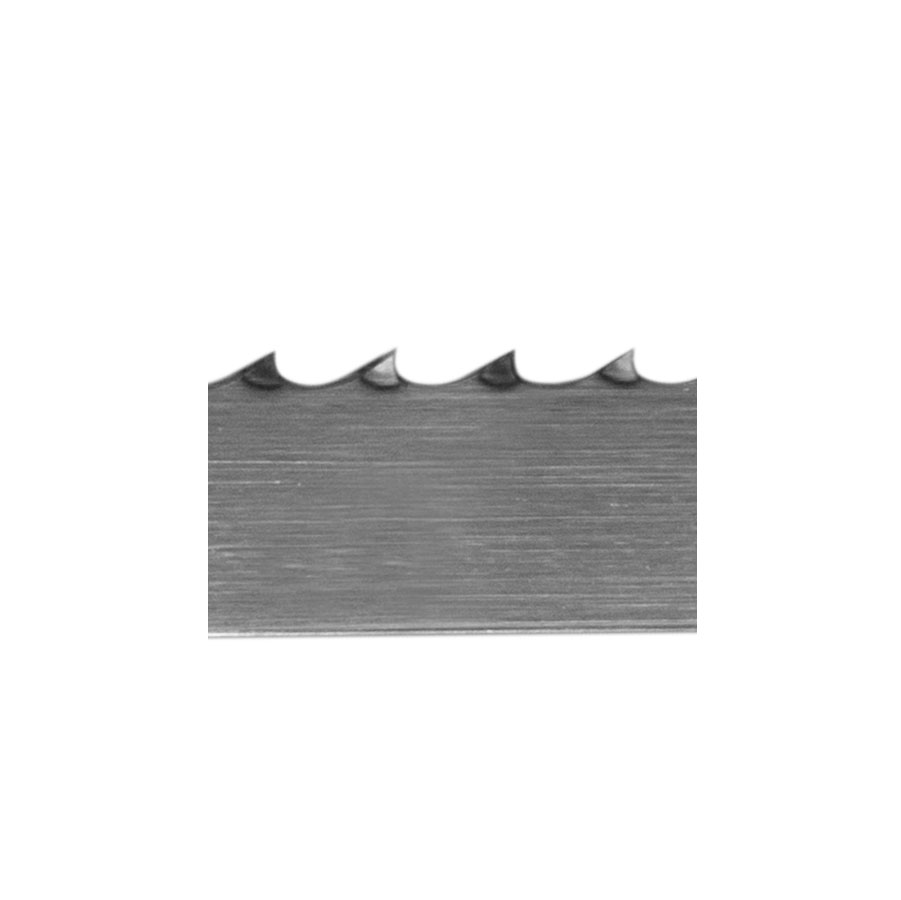
4 tpi
Tooth size: 6.35 mm (4 teeth per inch).
A well-balanced option for bone-in meat and for improving the cut appearance.
Suitable for frozen and fresh meat, especially on machines with a linear speed below 20 m/s.
Available in stainless steel for maximum hygiene.
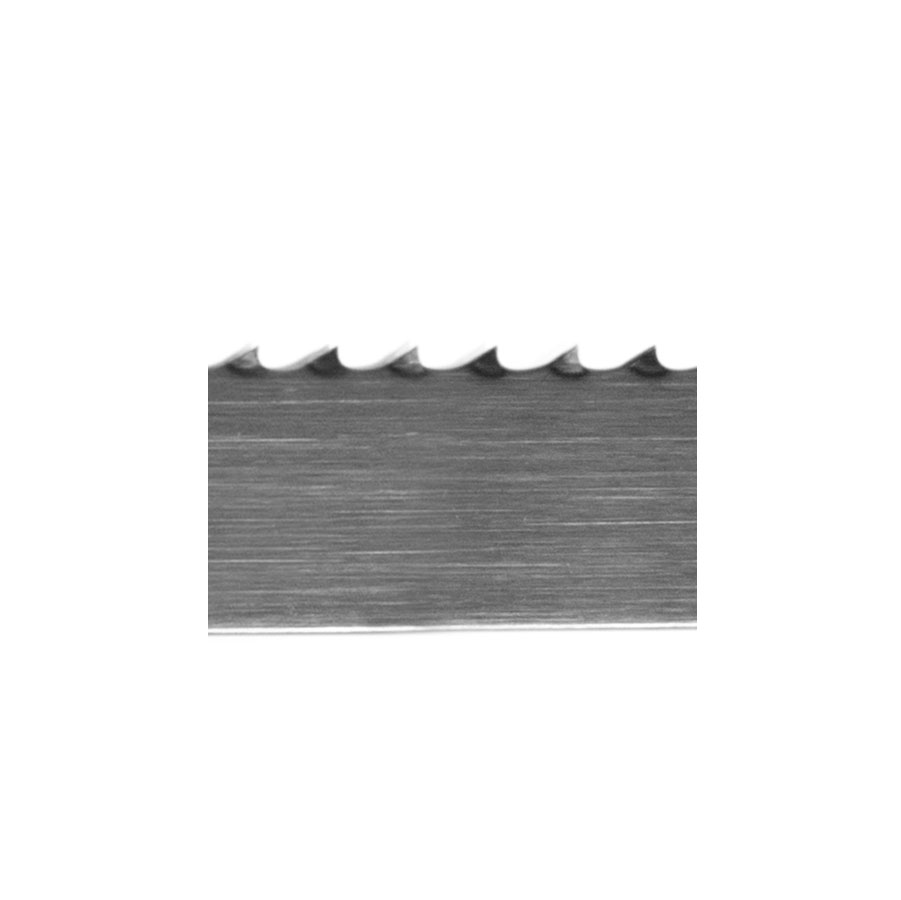
6 tpi
Tooth size: 4.20 mm (6 teeth per inch).
Ideal for fresh meat with small bones. This tooth pitch helps minimize bone breakage, improves the cut finish, and reduces waste.
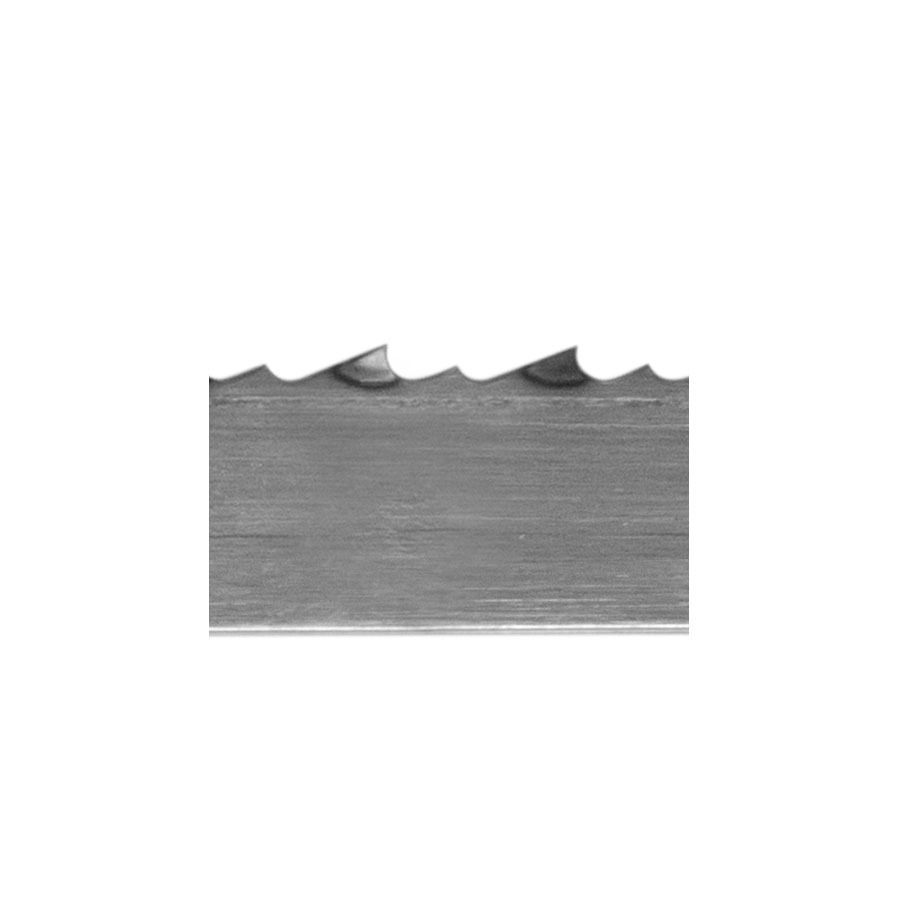
CTooth
Tooth size: 10 mm.
Profile with an intermediate tooth to reduce residue build-up in the cutting area. Highly suitable as a meat saw blade for fresh and frozen meat when seeking consistent performance and improved cut appearance.
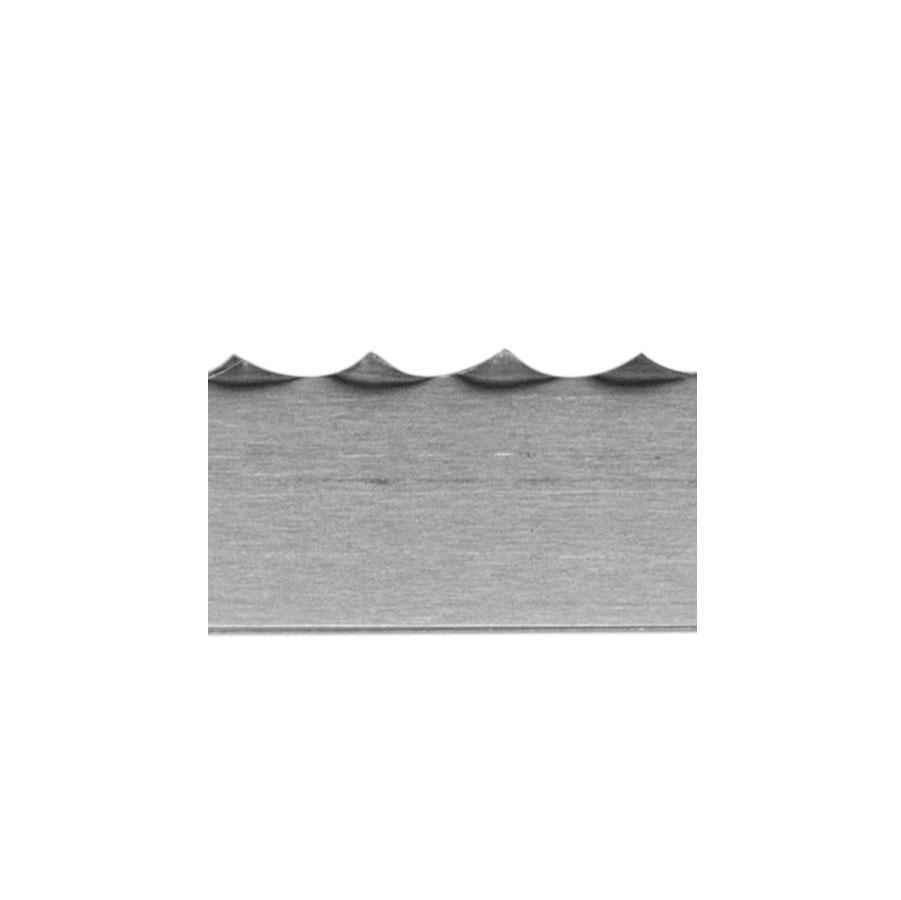
Halfmoon
Tooth size: 7 mm (scalloped shape).
Recommended for boneless fresh meat or meat with small bones. Especially suitable for lamb when seeking clean cuts and great appearance.
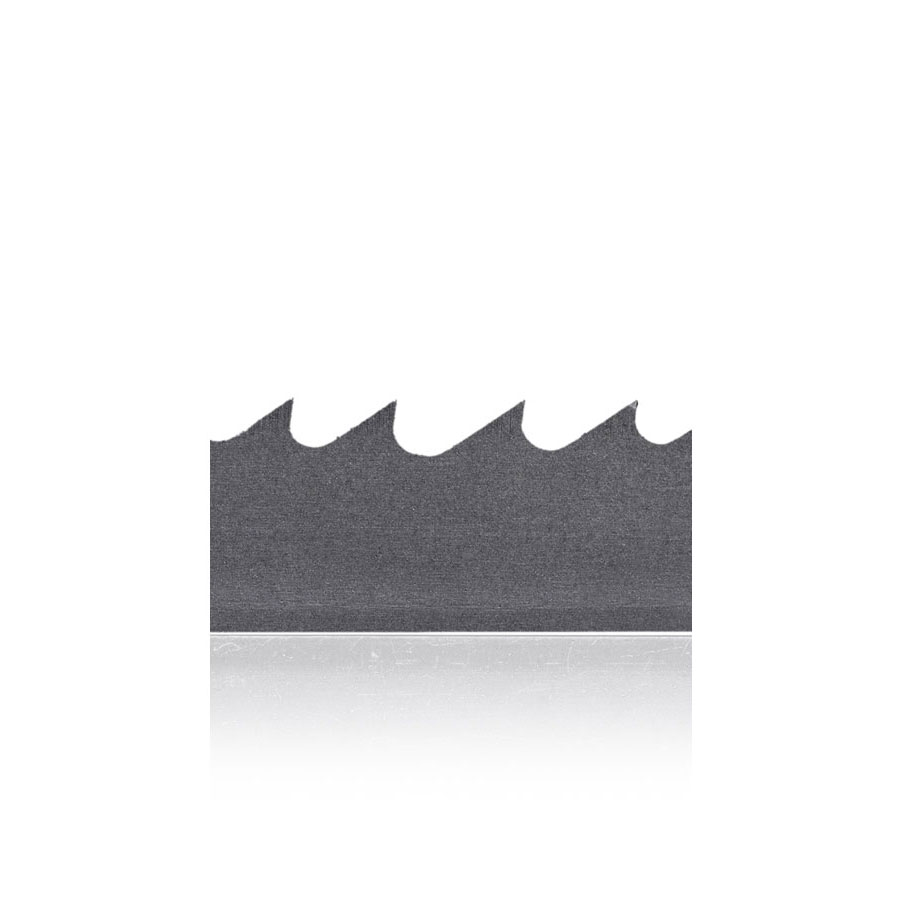
CORTEX Vary
Indicated for bone-in meat and high-density bones (e.g., high-volume beef). Special tooth geometry to evacuate residue efficiently and increase cutting speed. Especially useful in automatic lines where a standard blade is not enough.
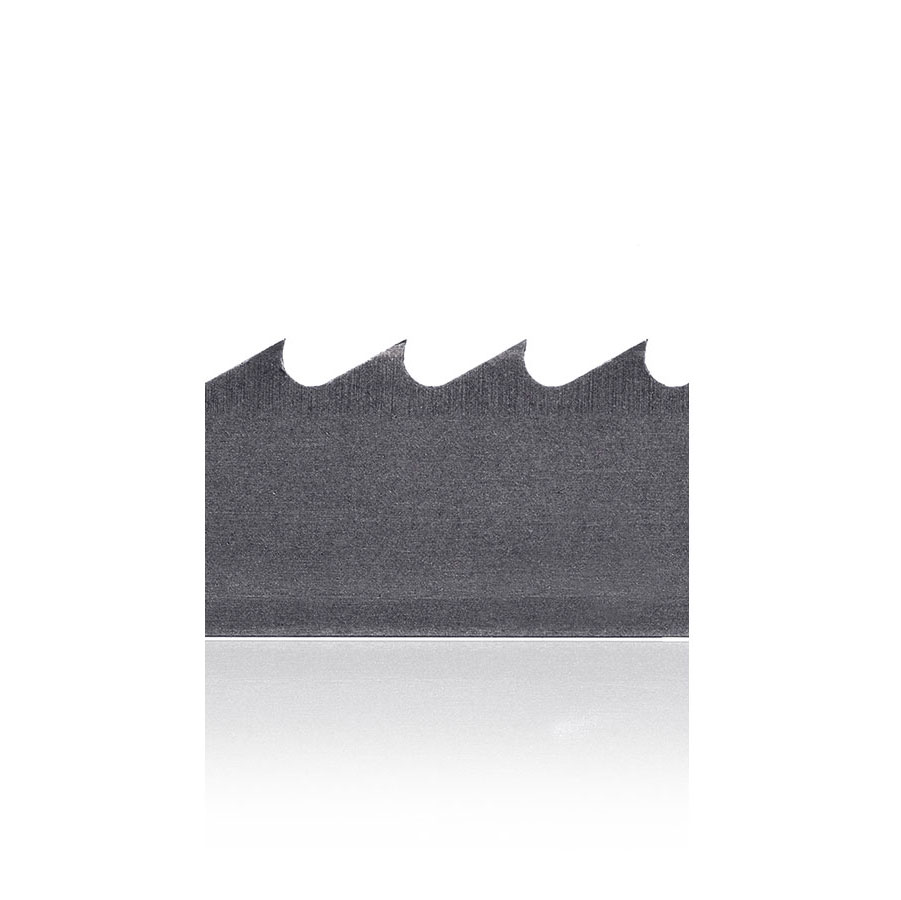
DIAMANT 4tpi
Tooth size: 6.35 mm (4 teeth per inch).
Designed for demanding work on bone-in meat and high-density bones, focusing on sustained productivity and cutting consistency, especially in automatic lines.
BANDSAW BLADES FOR POULTRY MEAT
4 tpi
Tooth size: 6.35 mm (4 teeth per inch).
A reliable option for poultry bones and portions when cutting stability and a good finish are required. Suitable for processes with linear speeds below 20 m/s.
Available in stainless steel for maximum hygiene.
6 tpi
Tooth size: 4.20 mm (6 teeth per inch).
Recommended for finer and more controlled cuts, reducing breakage in small pieces and improving presentation.
Halfmoon
Tooth size: 7 mm (scalloped).
Suitable for clean cuts in fresh products, both boneless and with small bones, focusing on cut appearance.
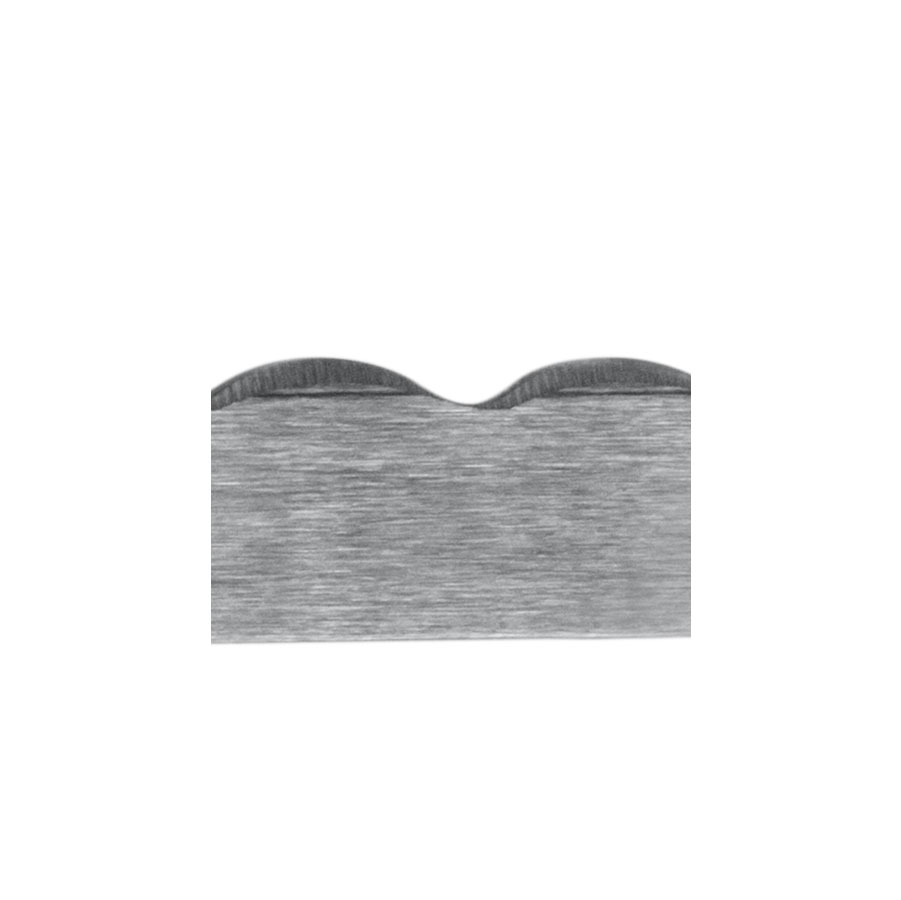
Convex
Tooth size: 15 mm (scalloped, bevelled profile).
Ideal for poultry and also for fresh products (cheese, fish, cold meats, vegetables). Focused on clean cutting and low waste.
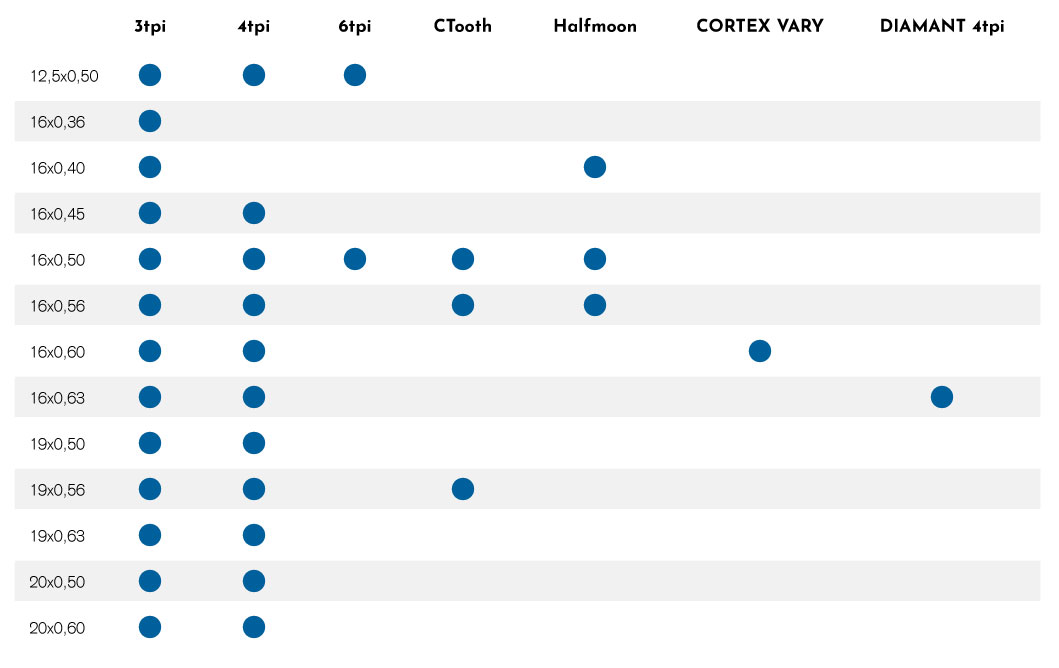
MEAT BANDSAW BLADE MEASUREMENTS
Check the measurement table to select the meat saw blade compatible with your machine. If you need confirmation, please provide the model and the cutting process.
FREQUENTLY ASKED QUESTIONS ABOUT MEAT BANDSAWS
Which tooth pitch is recommended for cutting frozen and fresh meat?
To choose the right meat saw blade, it’s important to consider waste evacuation during the cut. For frozen and fresh meat cutting, the 3 TPI (teeth per inch) configuration is the most common choice when looking for an aggressive cut and high throughput, especially on machines operating above 20 m/s. This pitch clears meat sawdust efficiently, helping prevent overheating and keeping performance consistent.
As an alternative, our CTooth profile is designed to reduce residue waste in the tooth gullet, which is helpful in continuous processes. If you want to prioritise appearance, 4 TPI offers an excellent balance, delivering a smoother cut surface while maintaining good cutting speed. At MESI Saws & Blades, we help you select the best pitch based on your production needs.
What is the ideal option for bone cutting?
For bone-in meat, stability and blade resistance are key. The standard choice is 4 TPI, which provides the firmness needed to pass through bone structures without deviation. For high-density bones (such as beef) or intensive automatic lines where wear is higher, we recommend specialised ranges such as CORTEX Vary or DIAMANT 4 TPI, designed for heavy-duty performance.
These solutions are made with high-grade steels to withstand repeated impact against bone while maintaining cutting consistency. Using a high-resistance bone bandsaw blade can also improve operator safety and maximise yield, thanks to reduced vibration and a more controlled cut.
Which configuration is recommended based on the machine’s linear speed?
Linear speed is a key factor when choosing a bandsaw blade. For machines running at high speeds (> 20 m/s), a more aggressive pitch such as 3 TPI is recommended, as it evacuates material quickly and helps avoid clogging. This setup is common in large plants where a fast, continuous workflow is required.
For machines with lower speeds (< 20 m/s), 4 TPI offers greater control and a finer. This is often preferred when the final presentation is a priority. At MESI Saws & Blades, we can match the blade to your equipment and working cadence.
Are there models available in stainless steel?
Yes. At MESI Saws & Blades, we manufacture specific stainless steel models for environments with strict hygiene requirements. These options, especially in 3 TPI and 4 TPI, are recommended for plants with constant humidity or frequent aggressive cleaning. Stainless steel provides excellent corrosion resistance and supports compliance with food safety protocols.
Choosing a stainless steel bandsaw blade helps reduce corrosion risk and supports long-term cutting performance. We use European-sourced stainless steels that combine flexibility for pulley work with strong cutting behaviour for the food industry.
Which tooth pitch helps minimise bone breakage?
To reduce splintering and bone breakage, 6 TPI is often recommended, especially for fresh meat with small bones or poultry. With more teeth in contact, the cut is smoother and more controlled, improving presentation and reducing the risk of unwanted bone fragments.
In addition to appearance, a 6 TPI bandsaw blade can reduce waste by creating a finer incision and supporting cleaner portioning.
What does TPI mean and how does it affect the result?
TPI means Teeth Per Inch (the number of teeth per inch on the blade). Lower TPI (e.g., 3 TPI) generally provides faster feed and a more aggressive cut, suitable for high-volume production. Higher TPI (e.g., 6 TPI) distributes the cutting load across more teeth, resulting in a cleaner finish and potentially less waste.
Understanding TPI helps optimise your process: lower TPI improves evacuation in deeper cuts, while higher TPI is often preferred for more delicate cuts where finish quality matters.
How do I know what size I need for my meat bandsaw?
Blade size depends on your machine model and manufacturer. We recommend checking the measurement table or providing us with your equipment model. It’s essential to confirm the blade length, width and thickness; incorrect sizing can cause vibration, premature weld failure or faster pulley wear.
As manufacturers, we can supply blades for most brands, adapting to the original specifications and recommending the best material and tooth pitch based on your product and process.