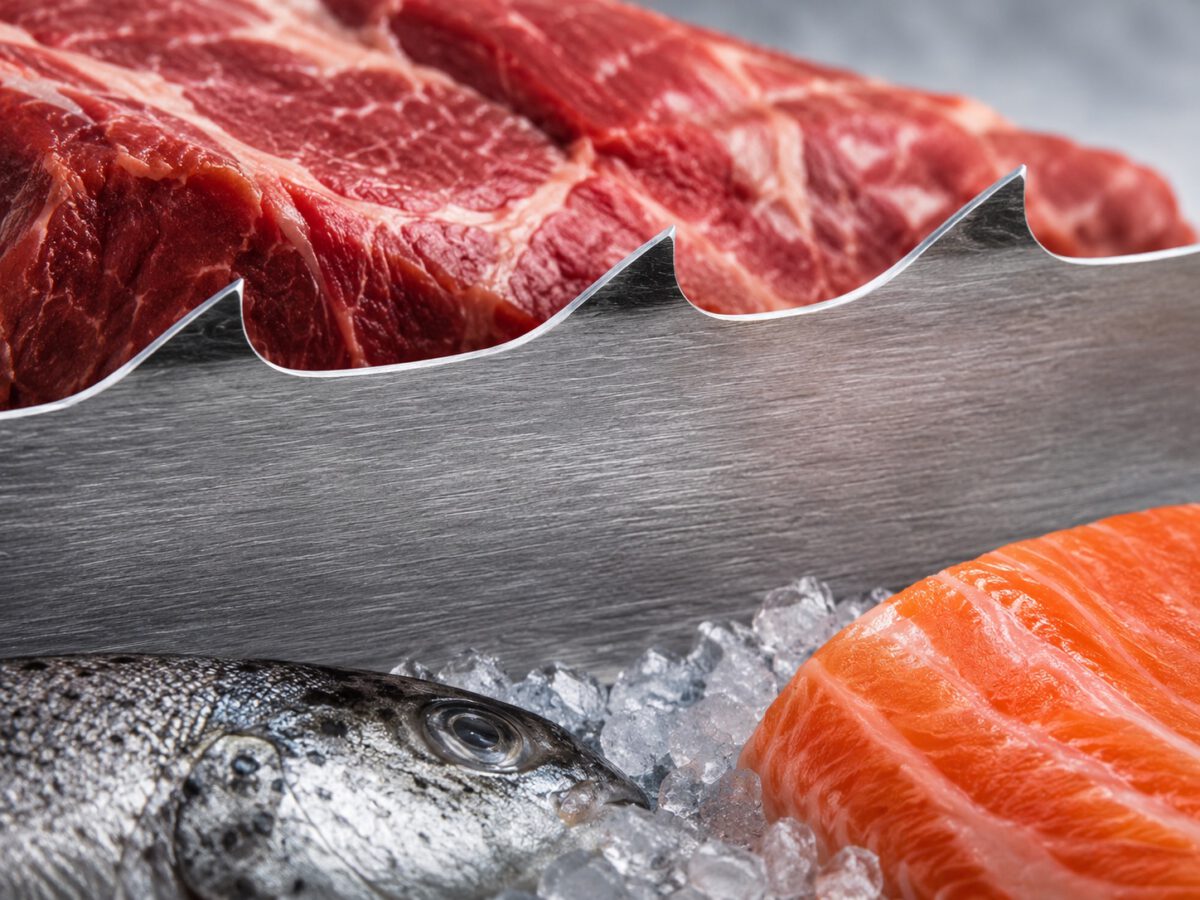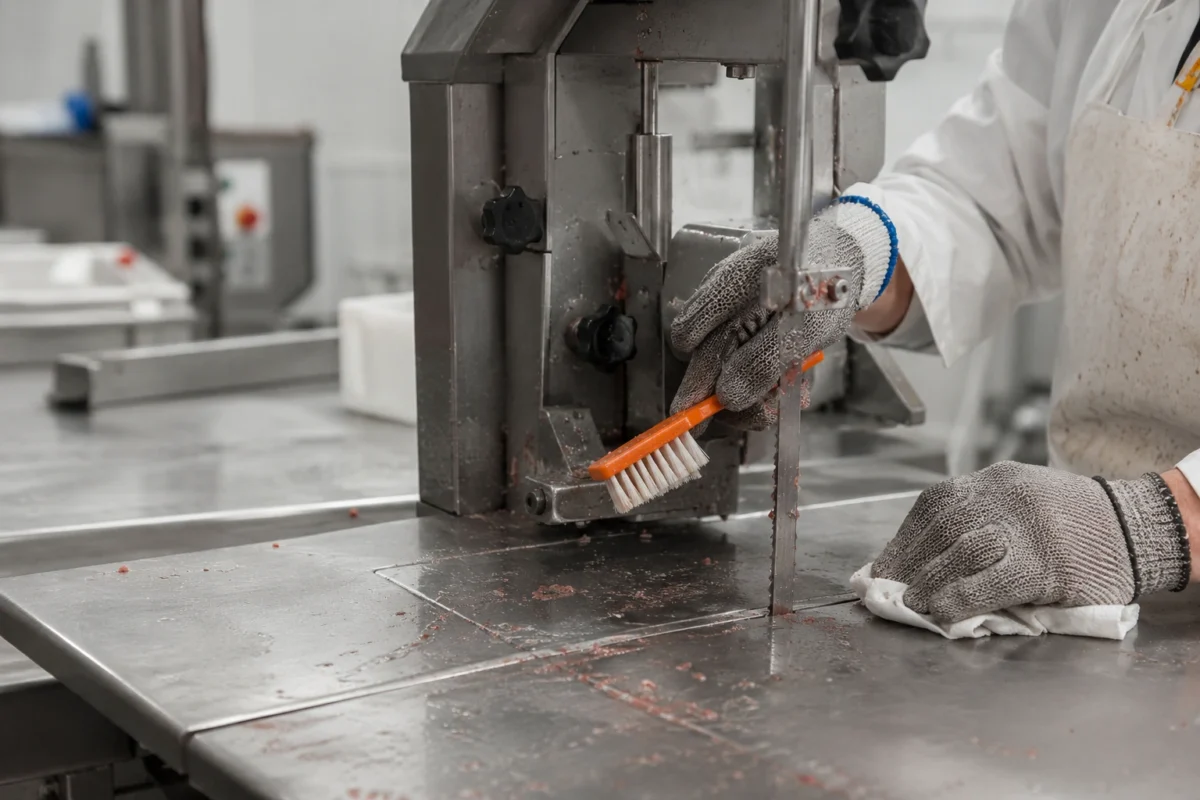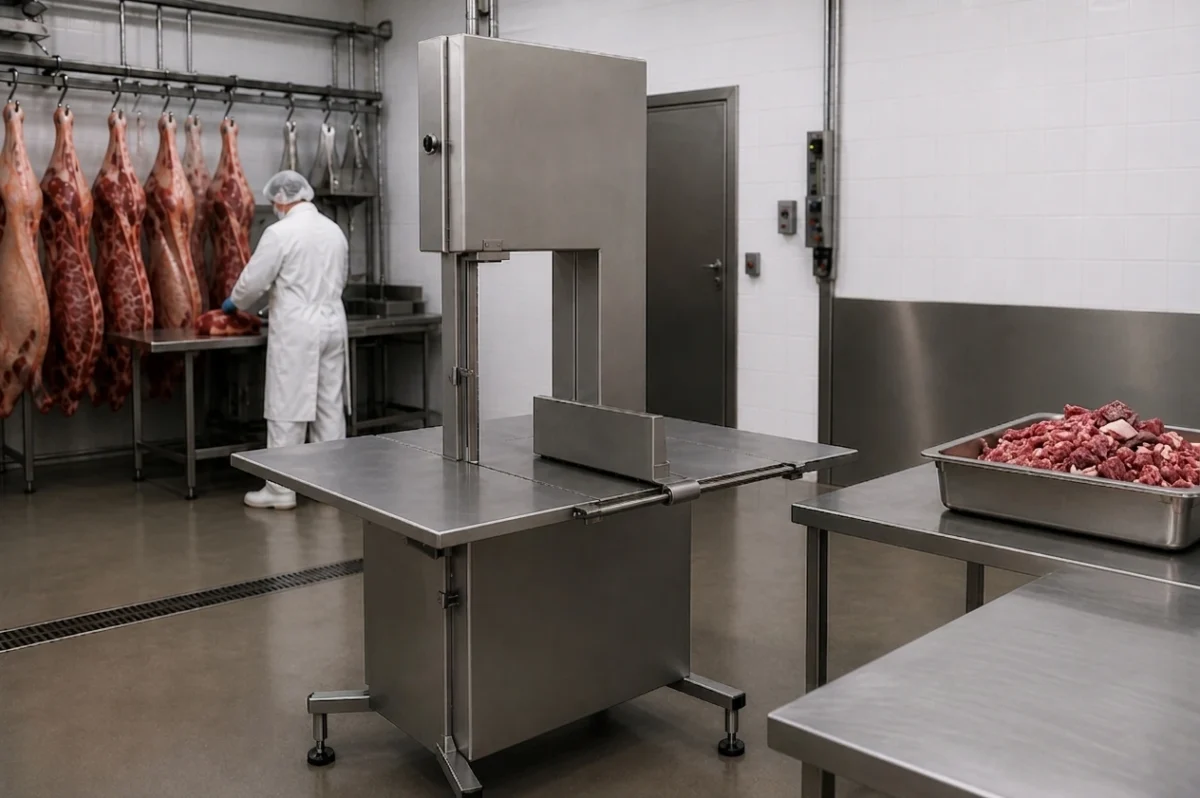


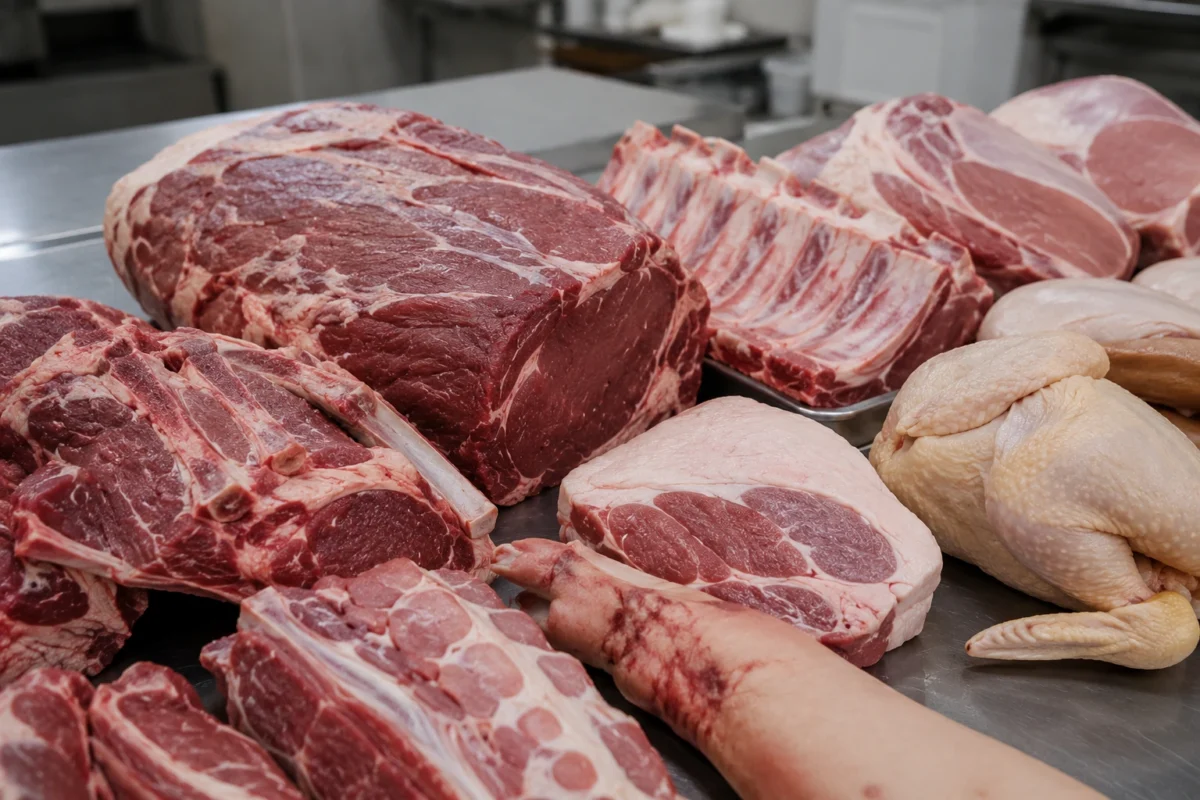
Meat bandsaws are one of the most widely used tools in cutting plants, abattoirs, meat processing plants and food processing facilities. Their versatility enables fast, precise and safe cuts to be made on a wide variety of products, ranging from fresh boneless meat to large frozen cuts.
However, not all meats have the same characteristics or require the same blade configuration. Choosing the right blade has a direct impact on the quality of the cut, productivity and the saw’s service life.
Beef
Beef is one of the most demanding applications due to the size of the cuts and the density of the bones.
Band saws can be used to cut:
- Whole carcasses
- Forequarters and hindquarters
- Ribs
- Bone-in chops
- Blocks of frozen meat
In high-throughput industrial applications, teeth designed to withstand heavy workloads and minimise vibrations during cutting are typically used.
Pork
Pork is probably one of the meat types most commonly processed using band saws.
These machines are used to cut:
- Pork carcasses
- Ribs
- Chops
- Shoulders
- Fresh hams
- Frozen products
Depending on whether or not bones are present, different tooth configurations are used to optimise cutting performance and the appearance of the cut.
Lamb meat
Lamb requires precise cuts to maintain the commercial presentation of the cuts.
Band saws are suitable for:
- Half-carcasses
- Chops
- Legs
- Ribs
Configurations with a higher number of teeth per inch help to reduce bone breakage and improve the final finish.
Poultry
Band saws are also widely used in the processing of:
- Chicken
- Turkey
- Duck
- Hen
They enable clean cuts to be made in pieces with small bones, whilst maintaining good productivity and reducing product waste.
Fresh and frozen meat
One of the major advantages of industrial band saws is their ability to process both fresh and frozen products.
Cutting fresh meat
When it comes to fresh products, the main objectives are:
- Precision
- A good-looking cut
- Minimal waste
Cutting frozen meat
When meat is frozen, the blade must withstand greater mechanical stresses.
In these applications, it is common to work with:
- Frozen blocks
- Meat on the bone
- Deep-frozen products
The tooth geometry is key to ensuring proper chip evacuation and maintaining cutting speed.
Do you need a cutting solution for beef, pork, poultry or frozen meat? At MESI Saws & Blades, we can help you choose the most suitable saw blade to maximise the performance and cut quality of your process.
Can an industrial bandsaw cut meat on the bone?
Yes. In fact, many band saws are specifically designed to cut through bones.
Factors influencing the type of cut
When choosing the right saw blade, it is advisable to consider:
Type of meat: Cutting chicken requires a different blade to cutting frozen beef.
Presence of bone: The density and size of the bone determine the most suitable tooth pitch.
Product temperature: Fresh and frozen meat present very different cutting challenges.
Production volume: High-capacity industrial lines require solutions designed to maximise productivity and durability.
Conclusion: Meat band saws are capable of processing a wide variety of products, including beef, pork, lamb, poultry and frozen meat. The key to achieving the best performance lies not only in the machine itself, but also in selecting the right blade for the type of product, the presence of bone and the working conditions.