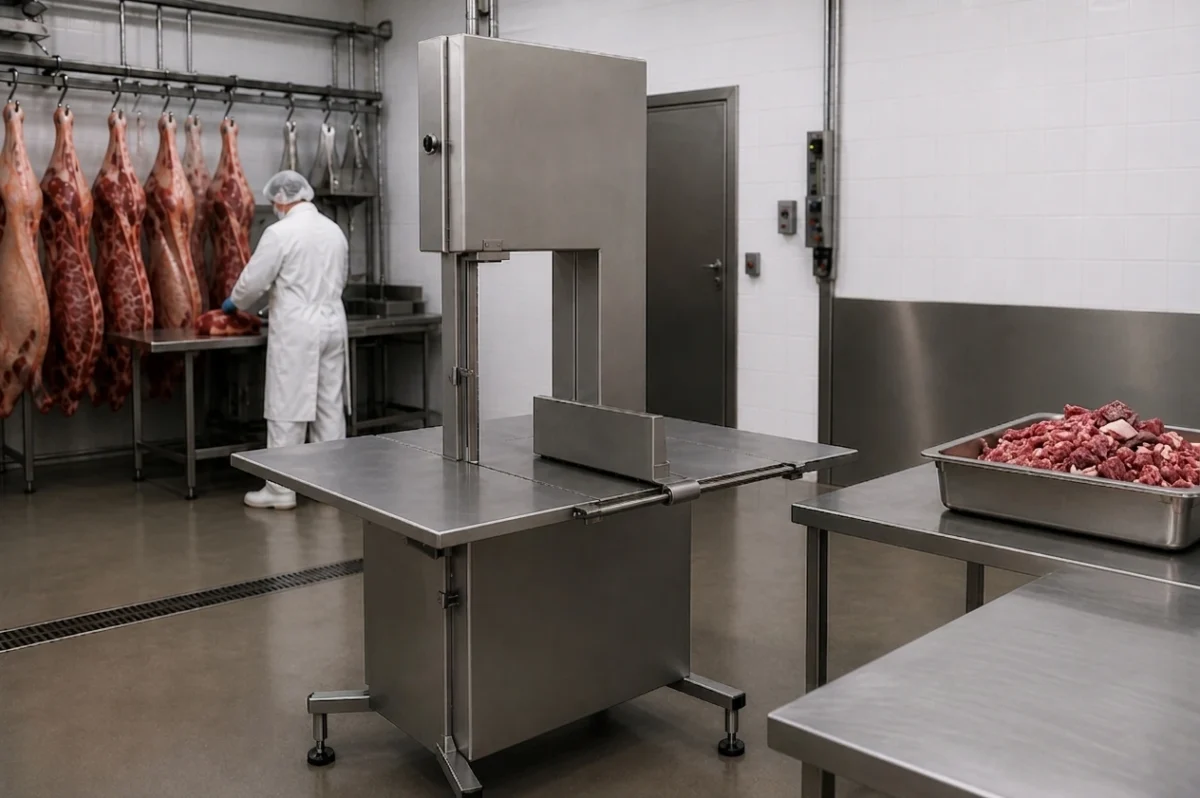
How to clean a meat bandsaw properly

Cleaning a meat bandsaw is essential to ensure food safety, maintain cut quality and extend the machine’s service life. The build-up of fat, meat residues and bone particles can affect the saw’s performance and increase the risk of contamination.

Meat bandsaw are designed to deliver precise cuts in both boned and boneless products, so proper maintenance is essential to ensure they continue to perform effectively.

Why is it important to clean a meat bandsaw?

Proper cleaning ensures that:

  • Food hygiene requirements are met.
  • Cross-contamination is prevented.
  • Cutting precision is maintained.
  • Blade wear is reduced.
  • The machine’s service life is extended.

How to clean a meat bandsaw step by step

1. Switch off the machine

Before starting any cleaning task, switch off and unplug the saw completely to ensure you can work safely.

2. Remove the saw blade

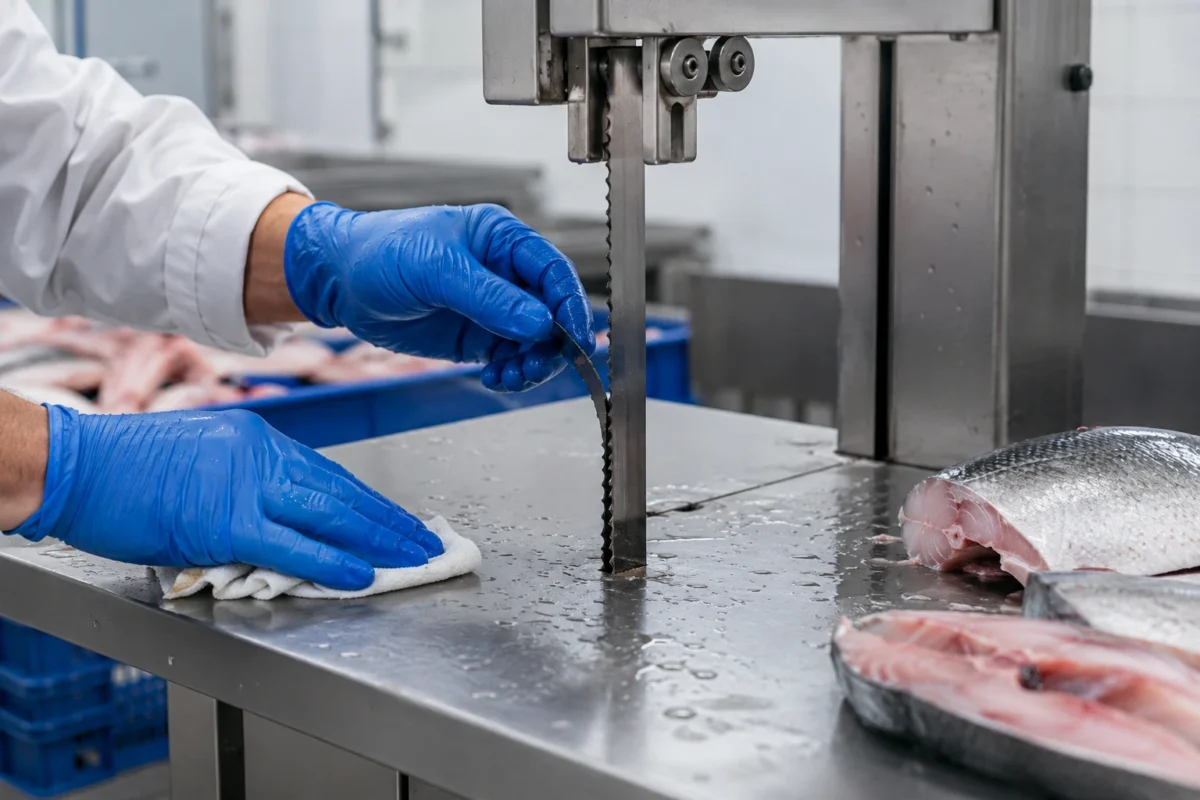
Release the tension and remove the blade, wearing protective gloves. Take this opportunity to check the condition of the teeth and look for any signs of wear.

3. Remove debris

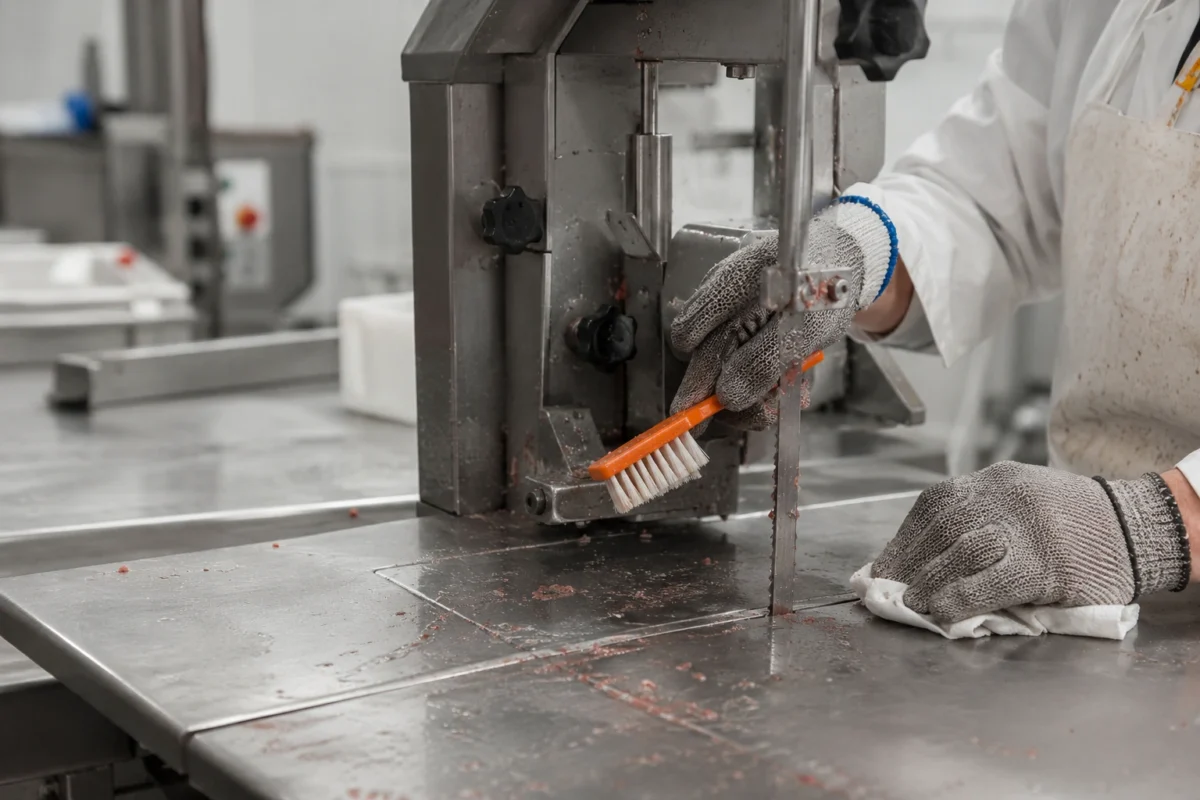
Remove any grease, meat and bone residue from the blade, guides, flywheels and work table using a suitable brush.

4. Wash and disinfect

Clean all components with food-grade detergent and then apply an approved disinfectant following the manufacturer’s instructions.

5. Dry and reassemble

Dry all parts thoroughly before reinstalling the blade and readjusting the tension.

Tips for extending the life of your saw

Use the right blade

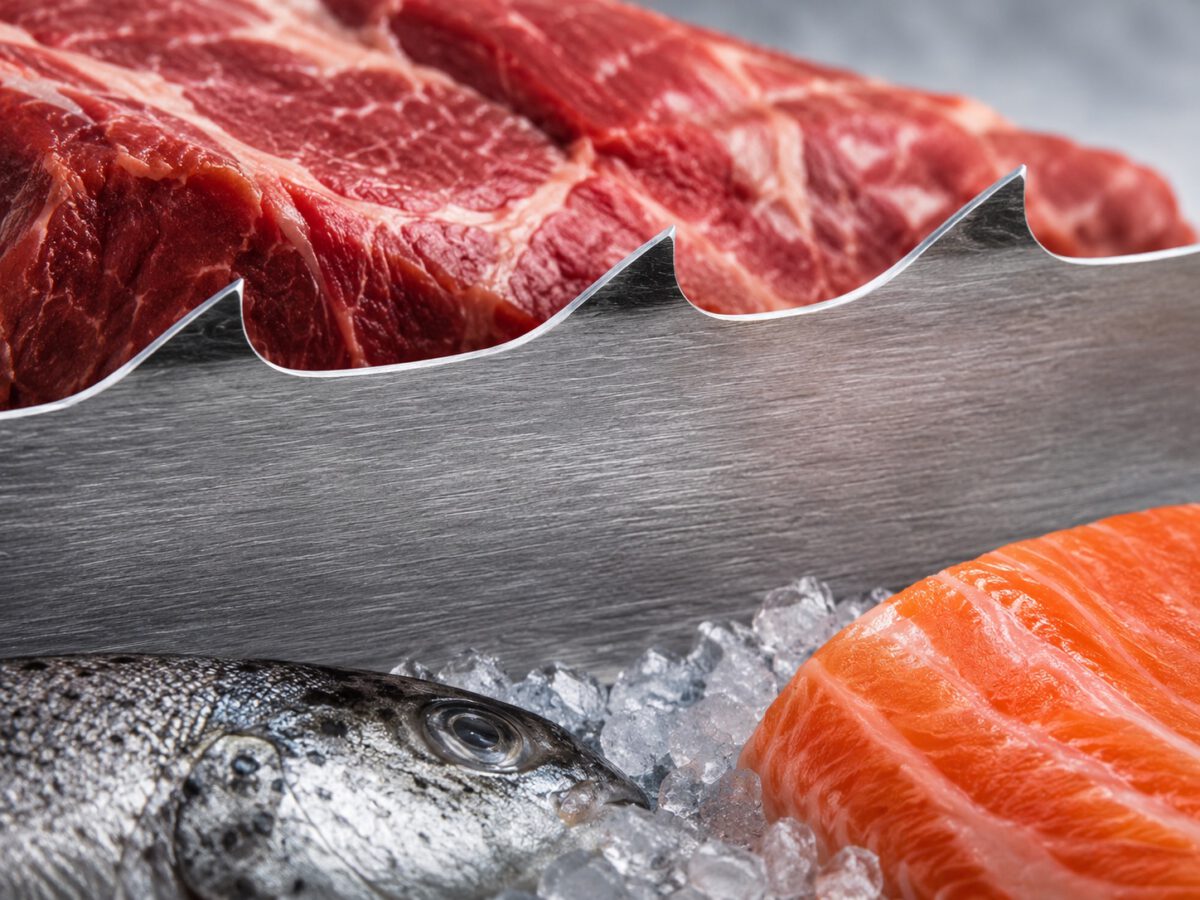
Each application requires a specific tooth configuration. Fresh meat bands are designed to optimise the cutting of different types of meat and bone.

Check the tension regularly

Incorrect tension can cause cutting deviations and reduce the blade’s lifespan.

Replace worn blades

Working with a worn blade reduces cut quality and puts extra strain on the machine.


As well as ensuring proper cleaning, it is essential to use a blade that is suited to the type of product and the production volume. If you are unsure which model to use, you can consult our guide on how to choose a meat bandsaw, where we explain the most important technical criteria for each application.

Conclusion: Cleaning a meat band saw is a simple yet essential task for ensuring hygiene, safety and the efficiency of the cutting process. Following a regular cleaning routine helps to keep the equipment in optimal condition and maximise the blade’s service life.

Are you looking for high-performance meat bandsaw? At MESI Saws & Blades, we offer specialist solutions for fresh meat, both boned and boneless, tailored to the requirements of each cutting process.

Bread and bun slicing blade: precision slicing

The bread and bun slicing blade is a product designed to achieve a clean, even cut without tearing in professional bakery and food industry settings. Unlike cutting meat or carcasses, the challenge here is not the hardness of the bone, but the combination of a crisp crust and soft crumb, which requires stability, the right tooth profile and precise settings to prevent crushing.

Choosing the right equipment and conveyor belt not only improves the visual finish, but also reduces waste, prevents deformation and ensures product consistency from batch to batch.

Sierra de pan y bollería: precisión en el rebanado
Bread and bun slicing blade: precision slicing

What is a bread and bun slicing blade cutter and when should you use it?

A bread saw is a continuous-belt machine designed for cutting:

  • Artisan bread with a crisp crust.
  • Sliced bread and loaves with a soft crumb.
  • Baguettes and loaves of various sizes.
  • Pastries and light, fluffy baked goods.

It is used when consistent slice thickness, optimised processing times and reduced manual handling are required. On production lines, it enables a constant pace to be maintained without compromising the structure of the product.

What to consider before choosing a bread slicer

1. Main product type

Cutting a loaf with a thick crust is not the same as cutting soft sandwich bread. The way the bread behaves under the blade is completely different.

  • With a hard crust, you need a blade that can cut through without vibrating.
  • With soft crumb, the priority is to avoid crushing and tearing.
  • With pastries, control and stability of the feed are particularly important.

2. Required slice thickness

If the aim is to produce uniform slices for packaging, the guide system and stops must ensure consistent precision. Even the slightest play can result in visible differences between slices.

3. Production volume

In high-volume production, consistent tension control and ease of cleaning have a direct impact on shift continuity. Equipment that is difficult to clean leads to downtime and variability.

Key product features

Food-grade construction

In bakeries, there is a constant presence of flour, crumbs and fine debris. The design must facilitate frequent cleaning and allow access to areas where food dust accumulates.

Stable table and support

Bread is light and can easily shift. A sturdy table and a suitable support system prevent the cut from tilting and ensure a straight cut.

Precise guidance

A well-adjusted guide reduces vibrations and keeps the blade’s path stable. With soft products, this makes the difference between a clean slice and a crumb that’s torn apart.

How to choose the right blade for bread and bun

The blade plays a key role in determining the final result. In baking, the serrated edge serves a different purpose to a straight blade: it must cut through the dough without tearing or squashing it.

Tooth spacing

  • Tighter spacing is better for cutting soft crumb.
  • Medium spacing works well for mixed breads.
  • Wider spacing can be used for thick crusts, provided it does not cause vibration.

Condition of the blade

A blade that is slightly blunt on bread causes more tearing than resistance. If strands appear in the crumb

Precise measurements

Working with the correct length, width and thickness prevents vibrations and deviations. It is not advisable to swap reference points between different machines without checking for compatibility.

Accurate measurements

Working with the correct length, width and thickness prevents vibrations and deviations. It is not advisable to switch reference points between different machines without checking for compatibility.

Keeping the guide close to the product

Keeping the upper guide as close as possible to the cutting point improves accuracy and reduces the exposed section.

Test cut at the start of the shift

A test cut allows any deviations to be detected before continuous production begins.

Hygiene and maintenance in bakeries

In Spain, hygiene in food production is governed by Regulation (EC) No 852/2004. In bakeries, the build-up of flour and crumbs requires clear cleaning routines to prevent cross-contamination and maintain productivity.

Critical cleaning points

  • Guides and support area.
  • Inside of guards.
  • Lower area where crumbs accumulate.
  • Table surface and stops.

Regular cleaning not only complies with self-monitoring requirements, but also prevents accumulation from affecting the stability of the cut.

Common mistakes when buying a bread slicer

  • Choosing equipment designed for hard crusts when the main product is soft bread.
  • Underestimating the importance of the serration.
  • Failing to specify the actual slice thickness required.
  • Failing to consider ease of cleaning as a purchasing criterion.

Quick checklist before making a decision

  • Main type of bread or pastries.
  • Required slice thickness.
  • Volume per shift.
  • Cleaning frequency.
  • Exact dimensions of the compatible conveyor belt.

If you’d like to see what’s available, take a look at the bread and bun section.

Conclusion: when the equipment is selected based on the type of bread and the actual production rate, the slices retain their shape, the crumb does not tear, and the process runs smoothly, reducing waste and improving the final presentation.

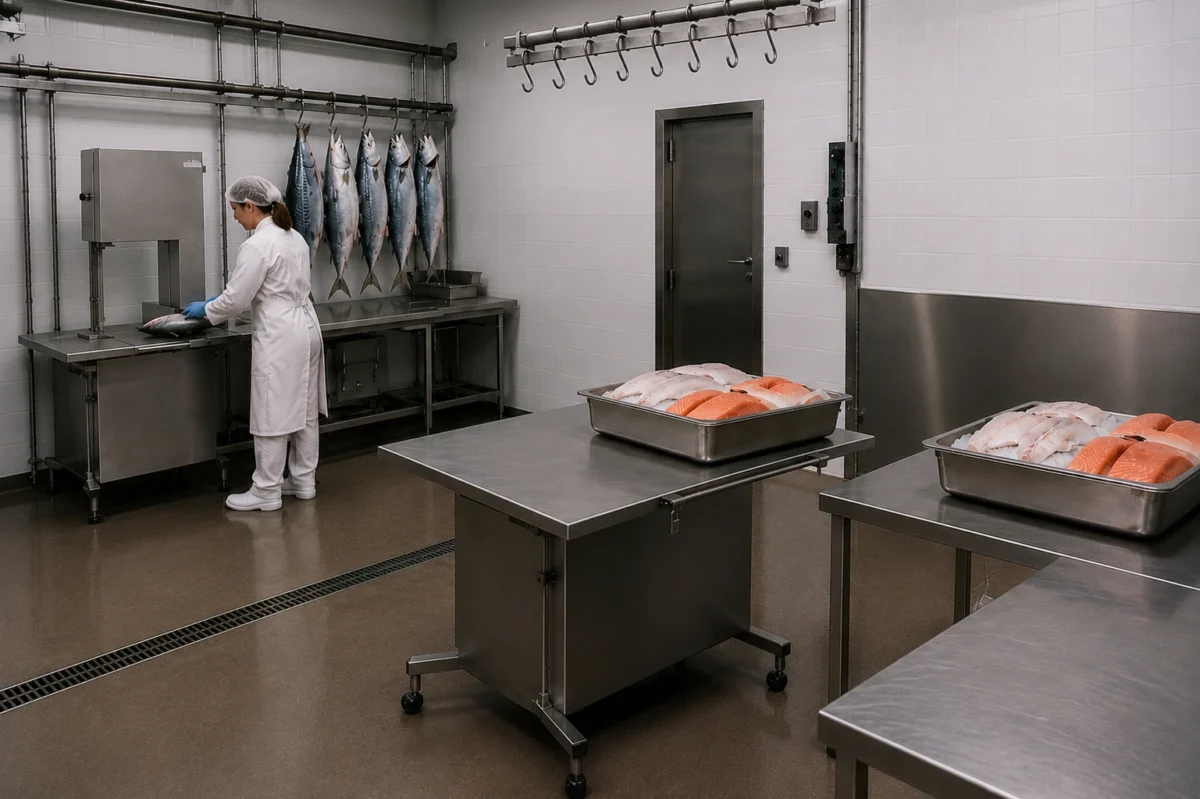
How to choose an industrial fish bandsaw

Industrial bandsaws for fish: how to choose the right one

Choosing an industrial fish bandsaw requires analysing various technical factors, beyond basic or general criteria.

Before making a decision, it is important to consider:

  • The type of product to be processed
  • The desired cut finish
  • Production capacity
  • Working environment conditions

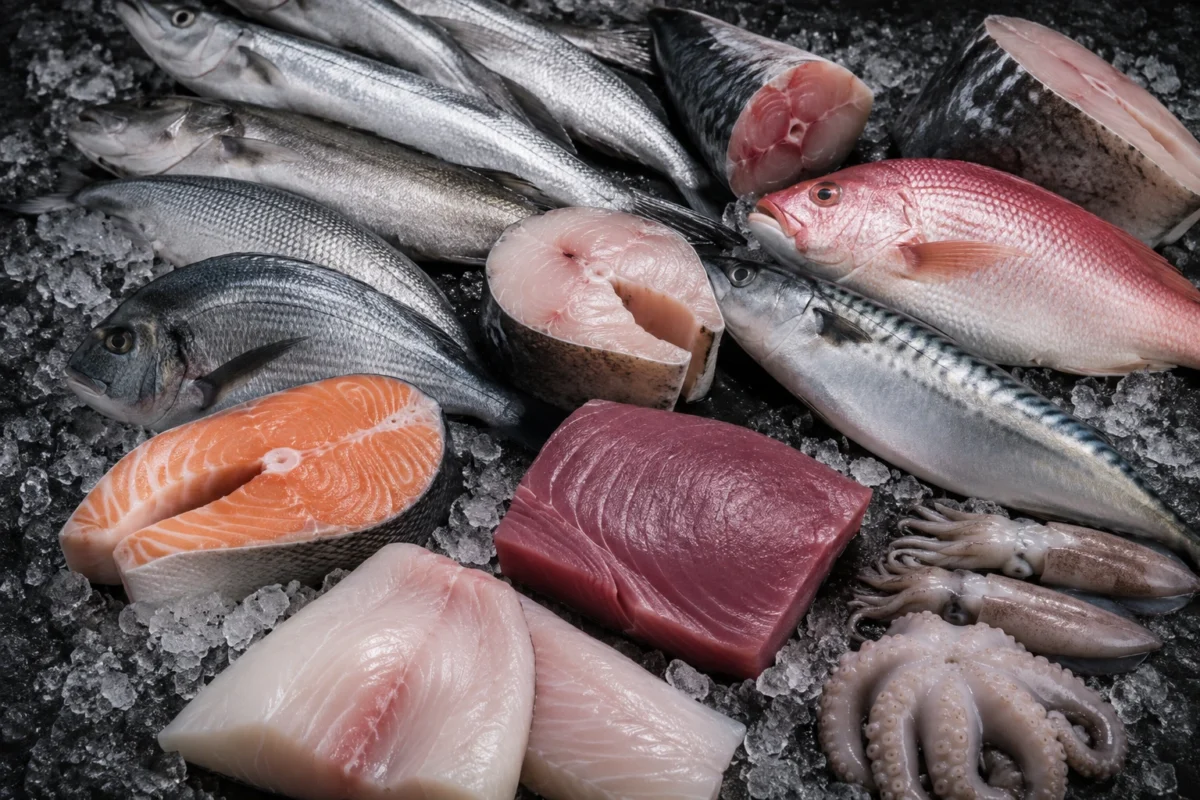
Bandsaws are designed to make precise cuts in fresh, frozen or deep-frozen fish, enabling the production of uniform portions and optimising processing times compared to manual methods.

Selecting the right equipment helps to improve operational efficiency, minimise waste and ensure consistent quality in the final product.

Types of industrial fish bandsaws

Bandsaws can vary depending on their primary application, including:

  • Fresh fish processing
  • Cutting frozen fish
  • Cutting deep-frozen fish
  • Processing tuna and large fish

When handling frozen products or larger pieces, it is essential that the machine ensures good belt stability, as this directly affects cutting precision and product integrity.

Choosing the right model means clearly defining how it will be used and ensuring that the belt is not operated outside its optimal operating conditions.

What to look out for in the technical specifications

When reviewing the technical specifications of an industrial bandsaw for fish, it is advisable to focus on aspects that have a direct impact on performance and day-to-day operations.

Factors such as the strength of the materials, their resistance to corrosion, ease of cleaning, and the blade guidance and tensioning system are crucial in environments where hygiene is a priority.

Furthermore, the stability of the cutting area and the robustness of the machine as a whole influence the precision and safety of the process.

The motor power must also be suited to the type of work, particularly when dealing with frozen fish, where greater capacity is required without compromising control during cutting.

How to choose the right bandsaw

The cutting blade is a key factor in achieving good results in fish processing.

Factors such as:

  • Tooth pitch (TPI)
  • Tooth geometry
  • Grinding
  • Material

Must be suited to both the type of fish and its condition.

The right choice, combined with proper maintenance and regular cleaning, improves cut quality, enhances food safety and extends the tool’s service life, whilst reducing operating costs.

At MESI Saws & Blades, we help you find the right solution based on your product type, workload and cutting requirements.

How to choose an industrial meat bandsaw

Industrial meat bandsaw: how to choose the right one

The choice of an industrial bandsaw for cutting meat should not be based on superficial criteria, but rather on:

  • Suitability for the product type
  • Expected results
  • Workload
  • Terms of use

The bandsaw is designed to cut fresh, bone-in or frozen cuts of meat, ensuring consistent and repeatable portioning, as well as improving efficiency compared to manual methods.

Making the right choice helps to reduce waste, stabilise the production process and maintain a consistent cut quality.

Types of industrial meat bandsaws

There are different types of saws depending on their main use:

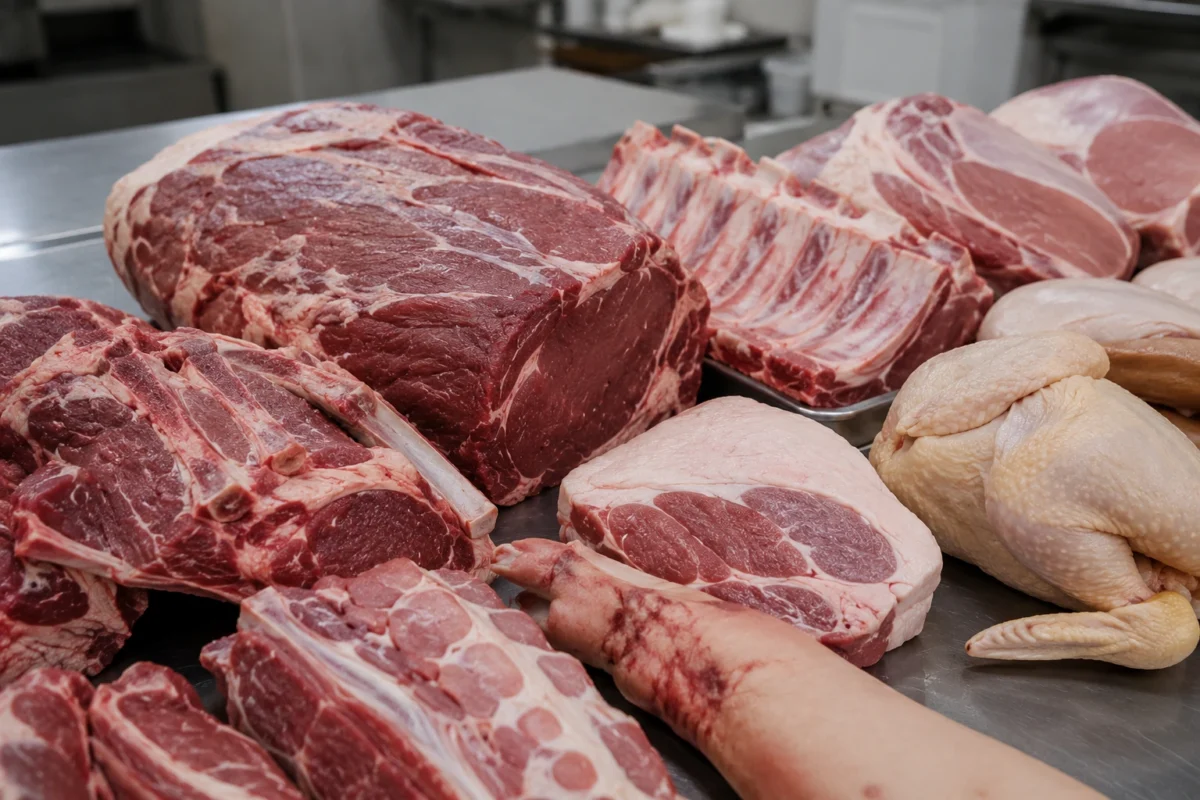
  • Fresh meat
  • Frozen meat
  • Meat bone-in
  • Carcass splitting
  • Poultry cuts

Furthermore, when cutting large pieces or carcasses, the stability of the bandsaw is key to achieving straight and precise cuts.

Choosing the right model involves clearly defining the intended use and avoiding using the saw blade in conditions for which it was not designed.

Examine the technical specifications of an industrial bandsaw for meat

When analysing a technical specification, it is essential to focus on practical aspects such as hygiene, cutting stability, safety and operating costs.

Factors such as the quality of the materials, ease of cleaning, the blade guidance and tension system, and the sturdiness of the table and stops have a direct impact on performance.

Similarly, the motor power must be suited to the actual task, avoiding both oversizing and under-specification in demanding applications.

Choosing the saw blade

Finally, the choice of saw blade is crucial to the final result.

  • Width and thickness
  • Tooth pitch (TPI)
  • Tooth geometry
  • Setting
  • Grade steel

These factors must be tailored to the type of product and the production rate. Choosing the right equipment, combined with proper maintenance and an effective cleaning routine, not only improves performance and food safety, but also reduces operating costs and extends the equipment’s service life.

At MESI Saws & Blades, we help you find the right solution based on your product type, workload and cutting requirements.