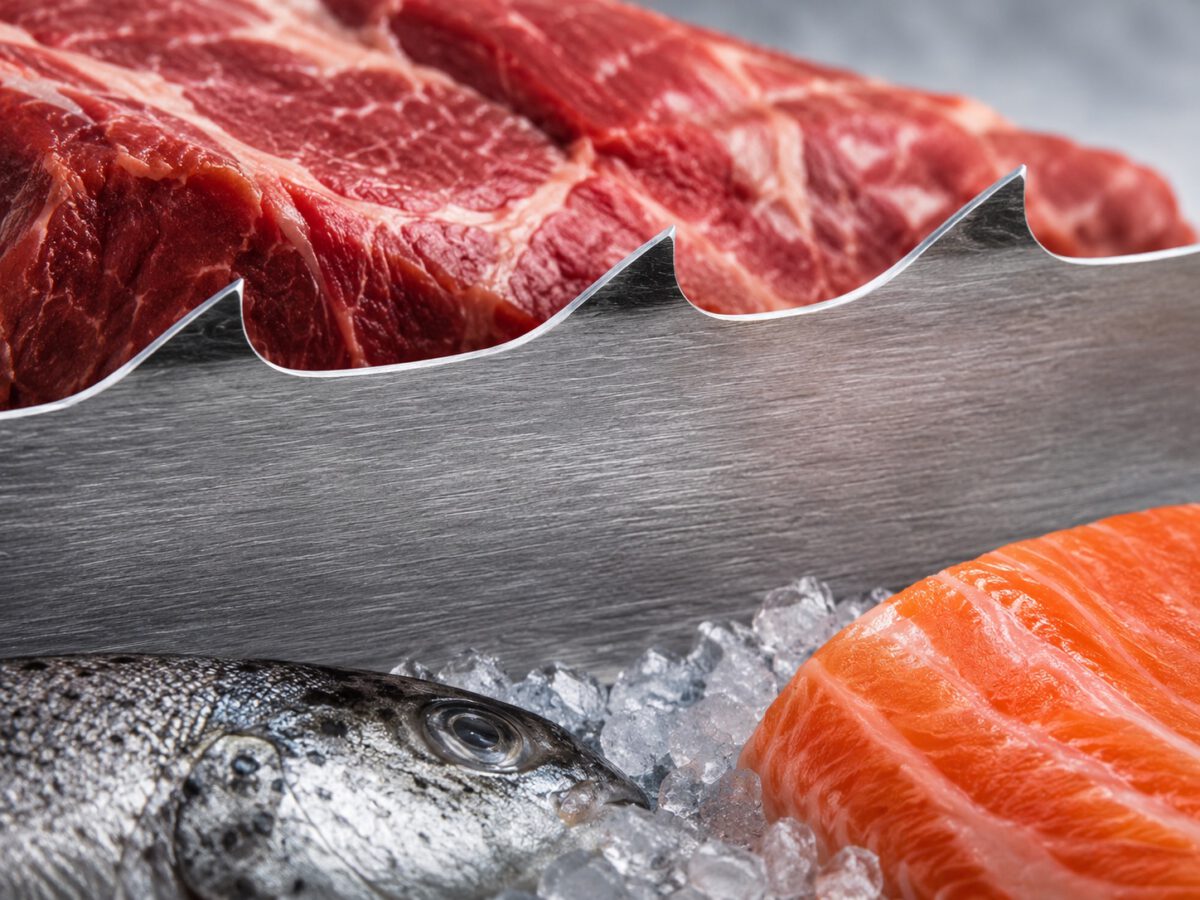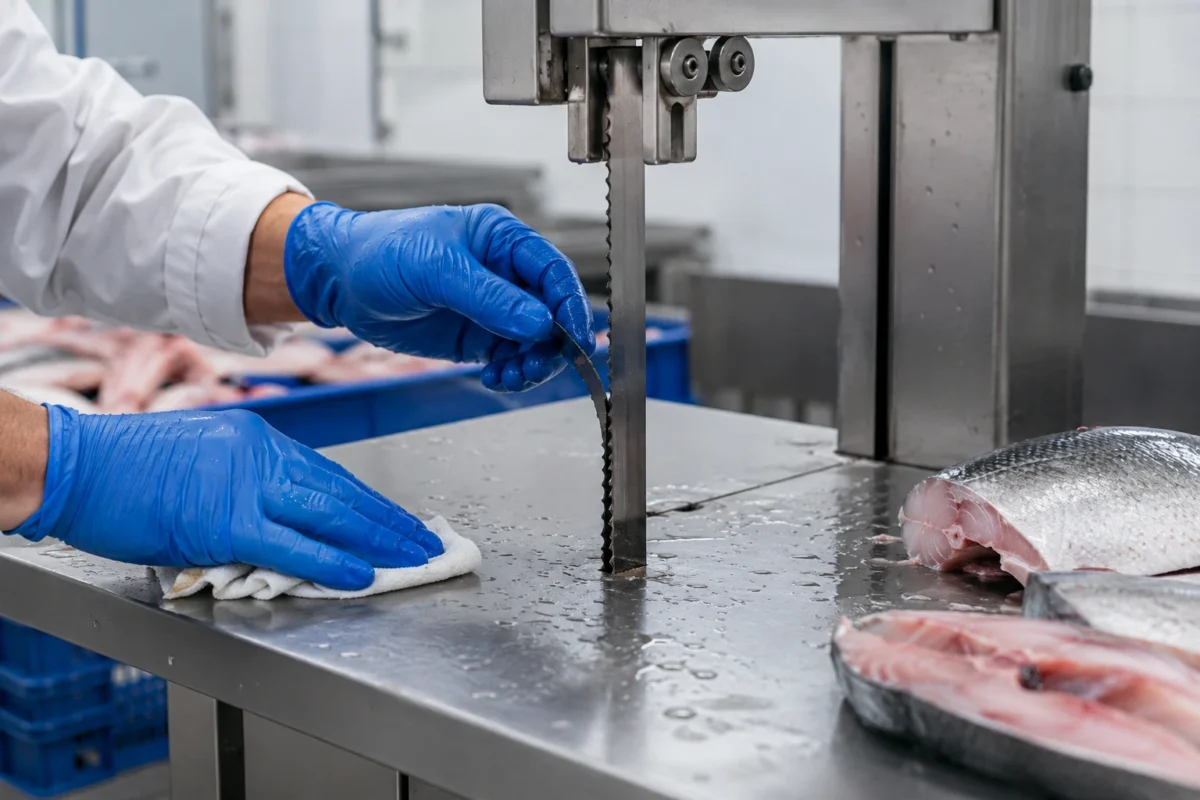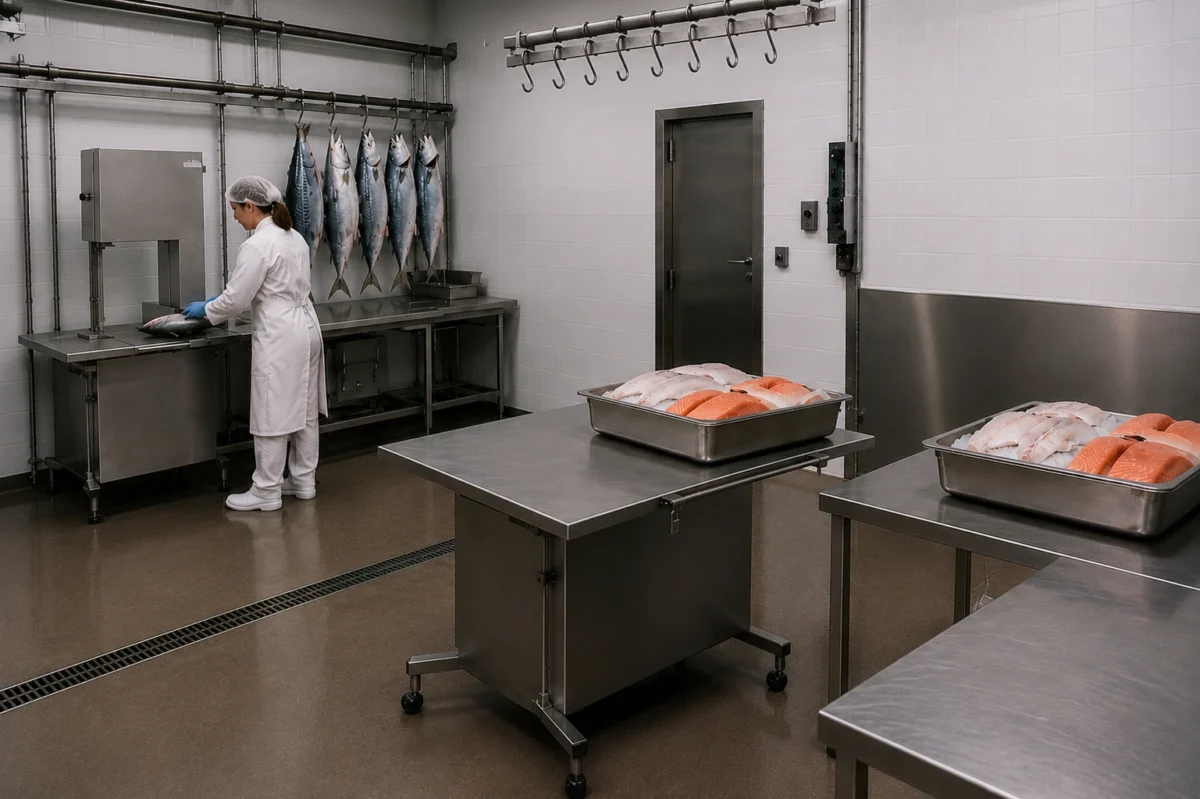


Industrial bandsaws are an essential tool in the fishing and food industries due to their ability to make fast, precise and uniform cuts. However, not all fish have the same characteristics, so choosing the right saw blade is crucial for achieving a good finish, reducing waste and extending the blade’s service life.
Fish bandsaws are designed to deliver precise cuts in both fresh and frozen fish, adapting to the requirements of each production process.
Fresh fish
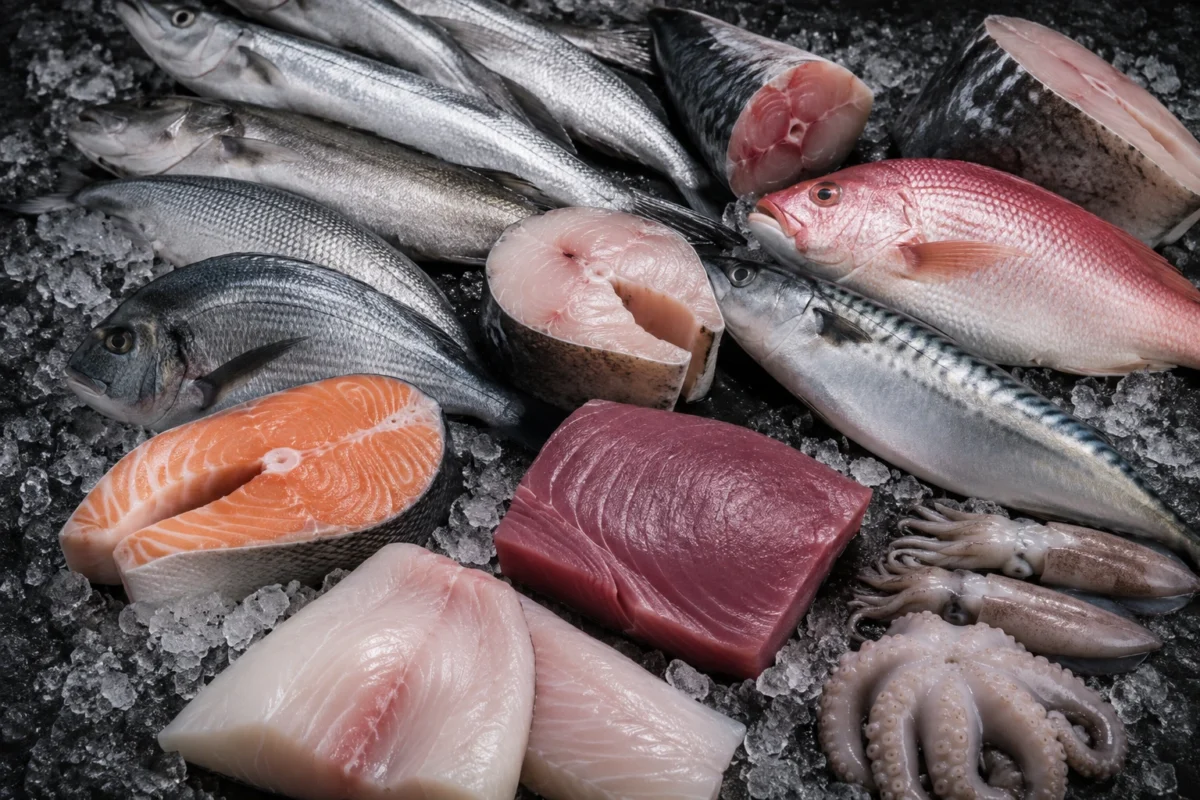
Band saws are used in the processing of fresh fish, primarily for filleting, as well as for peeling and slicing cephalopods. Among the most common are:
- Salmon
- Hake
- Cod
- Sea bream
- Sea bass
- Trout
- Mackerel
For this type of product, blades are used that are designed to provide clean cuts with minimal waste and an excellent surface finish. Depending on the product and the type of machine, concave, convex, or DB Bevel tooth profiles may be used, which are particularly well-suited for filleting and skinning fish and cephalopods.
Frozen and deep-frozen fish
Bandsaws are also designed to handle frozen and even deep-frozen fish, withstanding temperatures as low as -60 °C. Notable products in this category include:
- Frozen tuna
- Swordfish
- Alfonsino
- Porbeagle shark
- Frozen cod
- Frozen salmon
- Frozen hake
In these cases, specific tooth configurations are used, such as 3 TPI, CTooth or Cortex, which improve chip evacuation, reduce vibrations and increase productivity in intensive cutting processes.
Cephalopods and salted fish
As well as fresh and frozen fish, industrial band saws are suitable for processing:
- Octopus
- Squid
- Cuttlefish
- Salted cod
These products require blades that produce clean cuts, preventing tearing and minimising raw material wastage.
How do you choose the right blade?
The choice of saw blade depends on several factors:
- Product condition (fresh, frozen or salted).
- Fish size.
- Presence of bones or spines.
- Production speed.
- Type of cutting machine.
Choosing the correct tooth geometry helps to improve cut quality, reduce blade wear and increase the performance of the entire production line.
Do you need a saw blade for fresh, frozen or deep-frozen fish? At MESI Saws & Blades, we can help you choose the most suitable blade to optimise the performance of your cutting process.
The choice of band saw blade depends on several factors, such as the condition of the product, the size of the fish and the production speed. If you’re unsure which model you need, you can consult our guide on how to choose a bandsaw for fish, where we analyse the most important criteria for selecting the right blade.
Conclusion: An industrial bandsaw can cut everything from fresh fish such as salmon, hake or sea bass to large frozen species such as tuna, swordfish or mako shark. The key lies in selecting the right blade for the type of product and the working conditions, ensuring precise cuts, less waste and greater productivity.