


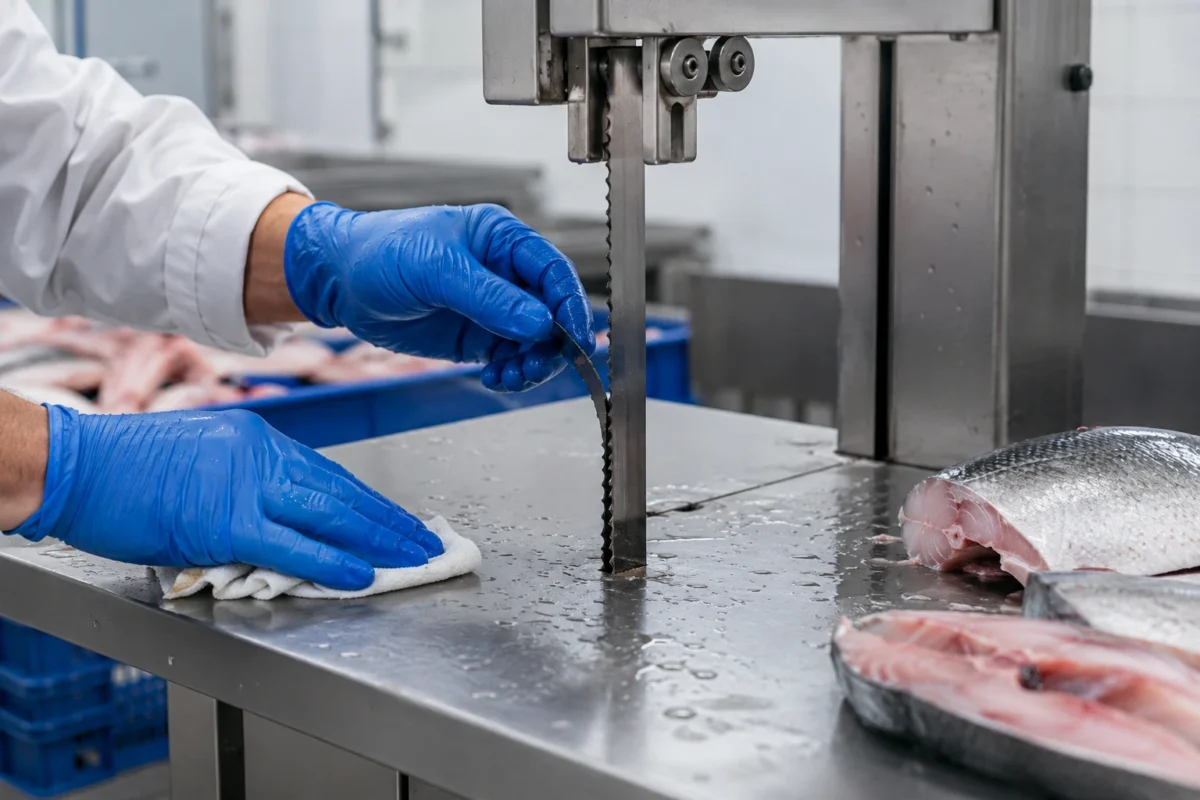
Cleaning a fish bandsaw is essential to ensure food safety, maintain cut quality and extend the service life of both the machine and the saw blade. The build-up of fish debris, scales, fat, salt and moisture can affect cutting performance, promote corrosion and increase the risk of cross-contamination.
Fish bandsaw are designed to work with fresh, salted, frozen and deep-frozen fish, delivering precise and clean cuts. Proper maintenance is key to preserving these performance characteristics and ensuring maximum hygiene during processing.
Why is it important to clean a fish bandsaw?
Proper cleaning ensures that:
- Food hygiene protocols are met.
- Cross-contamination between production batches is prevented.
- Maintain cutting precision and quality.
- Reduce the build-up of residue on the saw teeth.
- Prevent corrosion caused by moisture and salt.
- Extend the service life of the blade and the machine.
How to clean a fish bandsaw step by step
1. Switch off the machine
Before starting any cleaning task, switch off the saw and disconnect it completely from the mains to ensure you can work safely.
2. Remove the bandsaw blade
Release the tension on the blade and remove the band using suitable protective gloves. Take this opportunity to inspect the condition of the teeth and check for any wear or damage.
3. Remove fish residues
Carefully remove any flesh, skin, scales and fat accumulated on the blade, the guides, the flywheels and the work table. Proper removal of residues prevents loss of performance and hygiene issues.
4. Wash and disinfect
Clean all components with detergents suitable for the food industry and then apply an approved disinfectant. When processing salted or frozen fish, it is particularly important to remove all traces of salt to prevent corrosion.
5. Dry and reassemble
Dry all parts thoroughly before reinstalling the belt. Once assembled, adjust the tension correctly to ensure safe operation and a precise cut.
Tips for extending the service life of your fish bandsaw
Use the right blade
Fish saw blades come in different tooth configurations depending on the type of product. There are specific solutions for fresh fish, salted fish, tuna, frozen fish and deep-frozen fish, optimising performance and cut quality.
Control the build-up of debris
The presence of debris on the teeth can affect the saw’s feed rate and reduce cut quality. Frequent cleaning helps maintain the blade’s performance.
Replace worn blades
A damaged blade can cause uneven cuts, increase product waste and place greater strain on the machine.
In addition to proper cleaning, it is essential to use a blade suited to the type of product and the production volume. If you are unsure which model to use, you can consult our guide on how to choose a bandsaw for fish, where we explain the most important technical criteria for each application.
Conclusion: Keeping a fish band saw clean not only improves food safety but also helps maintain cut quality, reduce incidents and maximise the service life of the saw blade. A proper cleaning routine is a direct investment in productivity and performance.
Discover MESI Saws & Blades fish bandsaw blades and optimise the hygiene and performance of your cutting line.